
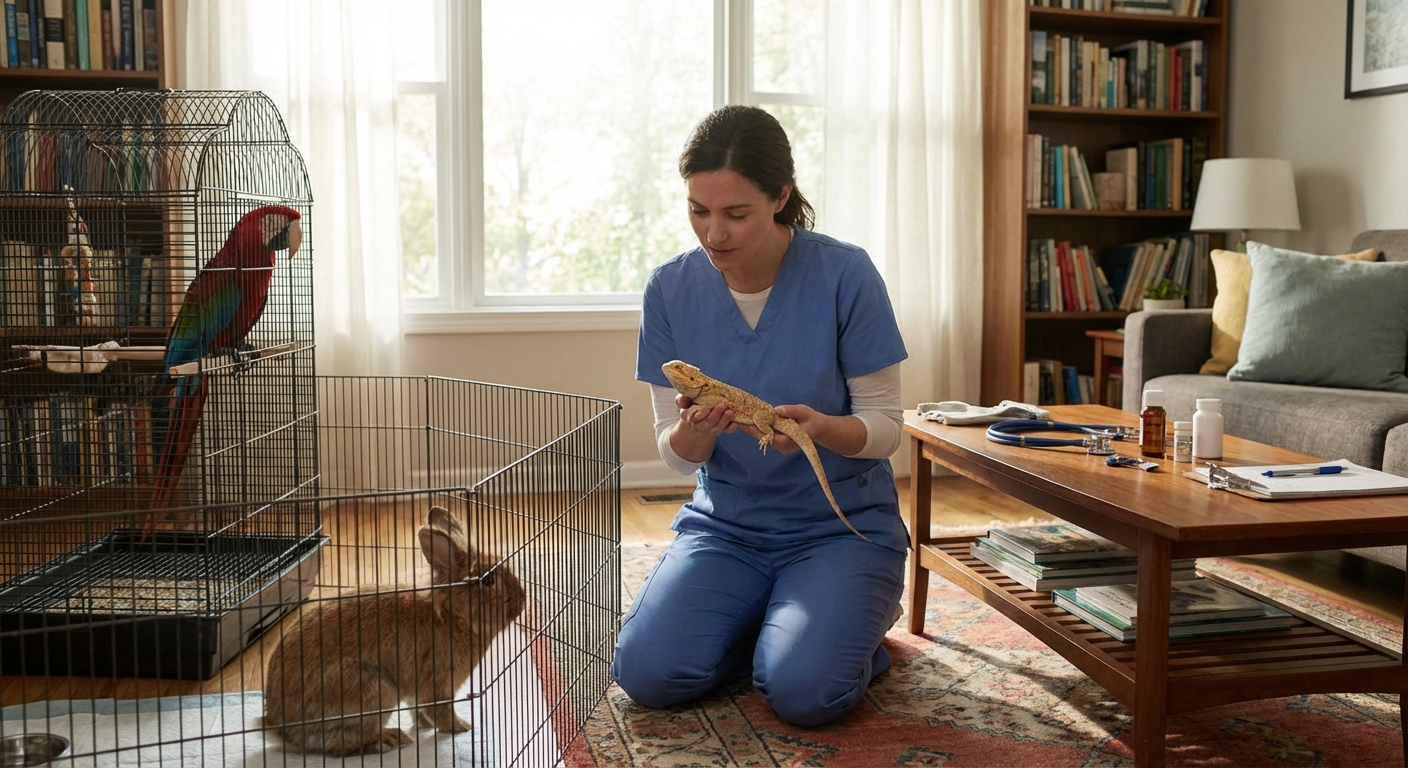
Because exotic pets often hide signs of illness, many don’t see a veterinarian until they are already very sick. Preventive care can dramatically improve quality of life and lifespan—yet it’s one of the most overlooked aspects of exotic pet ownership.
Exotic Pets Need Preventive Care Too
This guide focuses on health fundamentals for common exotic pets: how to spot early trouble, what routine care looks like, and how to avoid frequent—and preventable—mistakes.
The Silent Nature of Exotic Illness
In the wild, acting sick can make an animal a target. Many exotic species have retained this instinct:
- They continue to eat until very late in the disease process.
- They sit still or hide more, which owners may misinterpret as “calm.”
- Subtle weight loss often goes unnoticed under fur, feathers, or scales.
Veterinarians repeatedly stress: by the time obvious symptoms show (open-mouth breathing, seizures, collapse), treatment is harder, pricier, and sometimes less successful.
Routine Veterinary Care by Species
Birds (Parakeets, Cockatiels, Parrots)
Recommended care:
- Wellness exams once a year, twice yearly for seniors or birds with health issues.
- Regular nail and beak assessments; wing trims only if advised for safety.
- Baseline bloodwork in mid‑life to monitor organ function.
- Obesity and fatty liver disease from seed‑heavy diets.
- Respiratory diseases from dusty environments or poor air quality.
- Behavioral issues like feather plucking due to stress or boredom.
Common problems vets see:
Small Mammals (Rabbits, Guinea Pigs, Ferrets, Rats)
Recommended care:
- Annual wellness exams; dental checks are critical for rabbits and guinea pigs.
- Spay/neuter for rabbits and ferrets to prevent cancers and hormonal issues.
- Parasite checks; some species may need routine flea/tick or heartworm prevention.
- Overgrown teeth and mouth sores in rabbits/guinea pigs.
- Gastrointestinal stasis in rabbits from low‑fiber diets or stress.
- Adrenal disease and insulinoma in unaltered or older ferrets.
Common problems vets see:
Reptiles (Snakes, Lizards, Turtles)
Recommended care:
- Wellness exam within the first few months of ownership.
- Fecal (stool) parasite tests at least annually.
- Occasional bloodwork for long‑lived species or those with past health issues.
- Metabolic bone disease from inadequate UVB or calcium.
- Respiratory infections from incorrect temperatures or humidity.
- Retained shed around toes, tails, or eyes.
Common problems vets see:
Amphibians and Some Invertebrates
While options can be more limited, a vet with exotic experience can still:
- Assess body condition and skin health.
- Discuss water quality and enclosure hygiene.
- Identify nutritional deficiencies or husbandry problems.
Daily and Weekly Health Checks at Home
You don’t need to be a veterinarian to notice early warning signs. Build these quick check‑ins into your routine.
1. Appetite and Behavior
- Any sudden change—eating less, refusing favorite foods, or hiding more than usual—deserves attention.
- Note energy levels and interaction; a normally active bird sitting fluffed on the cage floor is an emergency sign.
2. Weight Monitoring
- Use a small digital kitchen scale to track weight weekly.
- Record weights so you can see slow trends; 5–10% weight loss can be significant.
3. Droppings and Elimination
Watch for changes in:
- Frequency.
- Color and consistency.
- Presence of blood, mucus, or undigested food.
For birds and reptiles, the appearance of droppings can give early hints about hydration, infection, or dietary issues.
4. Skin, Fur, Feathers, and Scales
Look for:
- Bald patches, broken feathers, or dull coat.
- Redness, swelling, or flaky skin.
- Retained shed; rings of old skin around toes or tails can cut off circulation.
Nutrition: The Most Common—and Fixable—Health Risk
Veterinarians consistently report that poor diet is the root cause of countless exotic health issues.
Birds
- Avoid seed‑only diets; aim for high‑quality pellets plus fresh vegetables and some fruits.
- Introduce new foods slowly and repeatedly; parrots can be cautious about change.
Rabbits and Guinea Pigs
- Base diet around unlimited grass hay (timothy, orchard, etc.).
- Limit pellets; choose high‑fiber formulas.
- Provide vitamin C for guinea pigs (they cannot produce their own).
Reptiles
- Insectivores need gut‑loaded insects dusted with calcium and vitamins.
- Herbivores require varied leafy greens, not iceberg lettuce.
- Omnivores (like bearded dragons) need a balance that changes as they age.
Vet insight: Dramatic, unplanned diet swings can upset the gut microbiome. Gradual adjustments are safer.
Hydration and Environmental Health
Subtle dehydration contributes to kidney and bladder problems in many species.
Water
- Provide fresh, clean water daily in dishes easy to access and hard to tip.
- Some animals (certain reptiles and amphibians) prefer moving water or misting; research your species.
Air Quality
- Avoid smoking, aerosols, and strong fumes near cages or tanks—especially with birds and small mammals.
- Ensure good ventilation; damp, stagnant air encourages respiratory disease.
Humidity
- Monitor with a hygrometer; don’t rely on guesswork.
- Both too high and too low humidity can cause skin and respiratory issues.
Handling and Stress Management
Chronic stress weakens the immune system, making animals more prone to infections and slower to heal.
Signs of Stress
- Persistent hiding or frantic attempts to escape when approached.
- Aggression or sudden change in temperament.
- Stereotypic behaviors: pacing, bar‑chewing, feather plucking.
Minimizing Stress
- Respect species that are more “look‑don’t‑touch.”
- Provide hides and quiet areas away from constant noise and traffic.
- Introduce new stimuli (toys, rearranged decor) gradually.
Vet perspective: Behavioral and medical health are deeply connected. Reducing stress often helps medical treatments work better.
Red‑Flag Symptoms: When to Call the Vet Immediately
Contact an exotic‑experienced vet right away if you see:
- Labored or open‑mouth breathing.
- Blue, purple, or very pale gums/comb in birds.
- Inability to stand, repeated falling, or seizures.
- Swollen eyes, nose discharge, or crusted nostrils.
- Persistent vomiting or regurgitation.
- No droppings, or straining to urinate/defecate.
- Sudden, marked bloating or abdominal swelling.
For prey species like rabbits and guinea pigs, 24 hours without eating is an emergency—their guts can shut down quickly.
Building a Long‑Term Partnership with Your Exotic Vet
A good veterinary relationship is one of the best health investments you can make.
- Schedule baseline exams soon after adoption.
- Keep a health journal: weights, diet changes, behavior notes, vet visits.
- Don’t be afraid to ask for clarification; understanding care plans improves outcomes.
If you don’t have a local exotic vet, ask general practices who they refer to, or check professional organizations for listings.
Caring Deeply Means Planning Ahead
Exotic pets are masters of subtlety. By the time illness is obvious, they’ve often been struggling for a while. Thoughtful preventive care—balanced diet, good habitat, routine vet visits, and daily observation—can change that story.
When we learn to read their small signals and respond promptly, our unusual companions get to live not just longer lives, but better ones.