
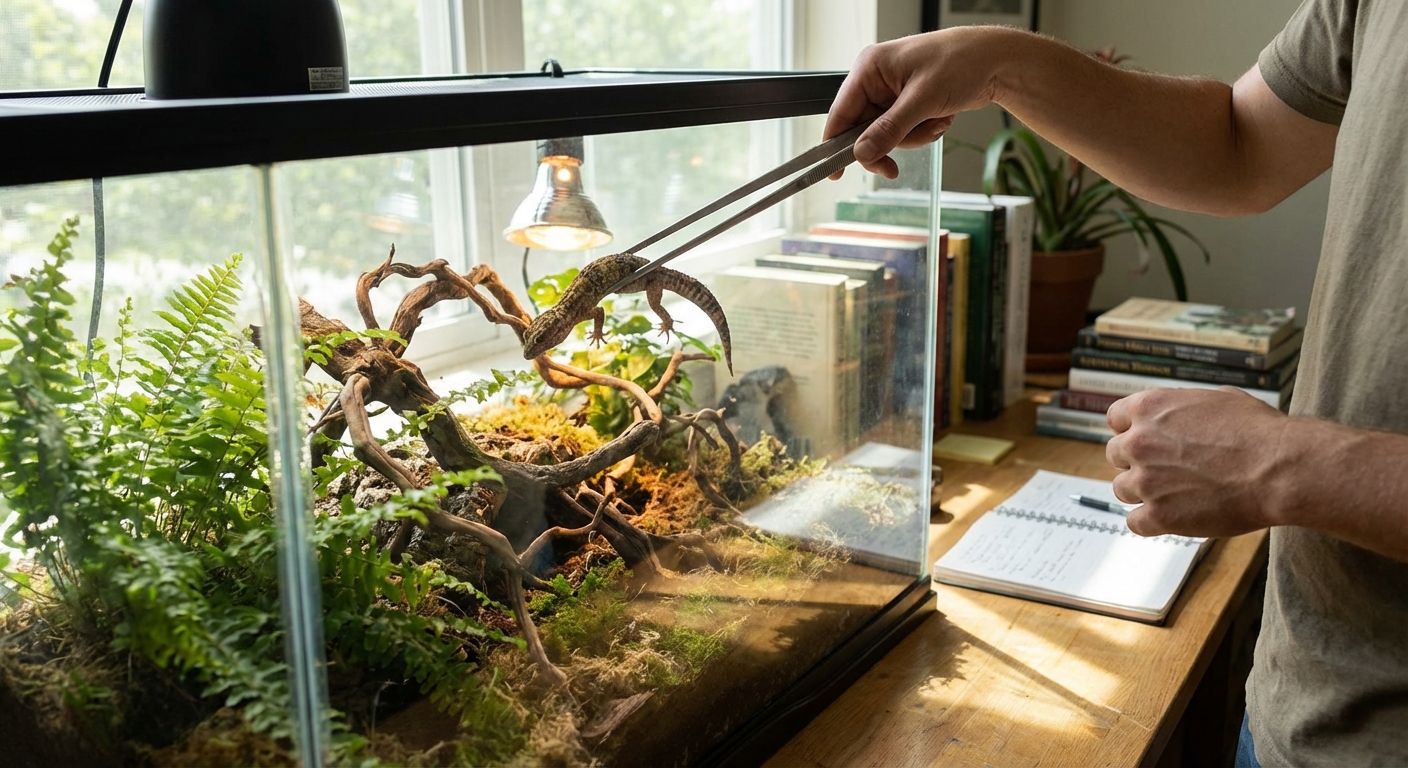
For many exotic pets, the enclosure is their world. Unlike dogs and cats, they can’t leave their environment when it’s uncomfortable. Poorly designed habitats are one of the most common causes of illness that exotic veterinarians see: respiratory infections, metabolic bone disease, skin problems, stress, and shortened lifespans.
Why Habitat Matters More Than You Think
Designing a proper habitat is an act of compassion. This step‑by‑step guide walks you through how to create safe, enriching homes for reptiles, amphibians, small mammals, and birds, with practical veterinary insights woven in.
Step 1: Start with Your Species’ Natural History
Before buying any tank or cage, ask:
- Is this animal arboreal (tree‑dwelling), terrestrial (ground‑dwelling), fossorial (burrowing), or aquatic?
- Does it come from tropical rainforest, desert, grassland, or temperate forest?
- Is it nocturnal, diurnal, or crepuscular (most active at dawn/dusk)?
Understanding natural history helps you mimic key elements of its world:
- Arboreal species need vertical space, branches, and secure climbing surfaces.
- Burrowers need deep, diggable substrate and stable tunnels.
- Desert species need strong lighting and low humidity; tropical species need higher humidity and dense cover.
Veterinarians emphasize that animals kept in environments that reflect their natural behaviors show lower stress, better appetite, and stronger immune systems.
Step 2: Choose the Right Enclosure Type and Size
For Reptiles and Amphibians
- Glass terrariums: Good for many reptiles and amphibians; front‑opening is often easier and less stressful than top‑opening.
- PVC or melamine enclosures: Excellent for maintaining heat and humidity, popular for snakes and some lizards.
- Size rule of thumb: Research species‑specific requirements and plan for the adult size, not the baby.
Common veterinary warning: Chronic stress from cramped enclosures contributes to poor shedding, immune suppression, and aggression.
For Small Mammals
- Use solid‑bottom cages, never wire floors; wire can cause painful sores (pododermatitis).
- Provide room to run, stand, and stretch fully.
- Avoid tiny “starter” cages; most are not suitable for long‑term housing.
For Birds
- Bigger is almost always better, while keeping bar spacing species‑appropriate.
- Horizontal bars help climbers like budgies and cockatiels.
- Ensure safe bar coatings (no flaking paint, rust, or zinc-heavy metals).
Step 3: Get Temperature and Humidity Right
Improper thermal and humidity conditions are among the top reasons exotic pets end up in the vet clinic.
Essential Tools
- Digital thermometers with probes on both warm and cool sides.
- Thermostat to regulate heating elements.
- Hygrometer to measure humidity.
Creating a Thermal Gradient
For reptiles and many amphibians:
- Provide a basking area at the recommended high temperature.
- Maintain a cooler zone so the animal can self‑regulate.
- Never rely on guesswork; always verify with thermometers.
Vet insight: Burns from unregulated heat rocks and overheating are sadly common. Use overhead bulbs or under‑tank heaters controlled by thermostats—never direct contact heat rocks.
Managing Humidity
- Desert species (e.g., leopard geckos): lower humidity, with perhaps a single humid hide.
- Tropical species (e.g., many tree frogs): higher humidity with proper ventilation to prevent mold.
- Larger water bowls.
- Live plants where appropriate.
- Mist systems or hand‑misting, monitored by a hygrometer.
Increase humidity with:
Step 4: Lighting and UVB—More Than Just Brightness
Many reptiles and some birds need specific light wavelengths to maintain normal physiology.
UVB for Reptiles
- Essential for species that bask in the sun (e.g., bearded dragons, many turtles, uromastyx) to synthesize vitamin D3.
- Position lights according to manufacturer guidelines for distance and replacement schedule.
- Provide unobstructed exposure—no glass or plastic between the bulb and the animal.
Without proper UVB, veterinarians frequently diagnose metabolic bone disease, characterized by soft bones, deformities, and fractures.
Day/Night Cycles
- Mimic natural photoperiods—typically 10–14 hours of light depending on season and species.
- Use timers to keep cycles consistent.
- Avoid bright light at night; use ceramic heat emitters or other non‑light heat sources if nighttime heat is required.
Step 5: Substrates, Furnishings, and Enrichment
Choosing Safe Substrates
- Reptiles: Often do well on paper, reptile carpet, tile, or species‑appropriate loose substrates (for confirmed burrowers) when managed carefully.
- Small mammals: Paper‑based bedding or aspen shavings (for many species). Avoid pine and cedar, which can release irritating oils.
- Birds: Paper liners or similar that can be changed daily to monitor droppings.
- Are dusty or aromatic.
- Can easily cause impaction if swallowed (e.g., walnut shell, some sands).
Avoid substrates that:
Hides and Structures
Provide at least one secure hiding place per animal—more for group animals. Hides reduce stress by offering:
- A place to retreat when startled.
- A dark, quiet sleeping area.
Enrichment
Exotic pets need mental and physical stimulation:
- Reptiles & amphibians: Branches, rock ledges, varied textures, occasional safe rearrangement of decor.
- Small mammals: Tunnels, chew toys, digging boxes, foraging challenges.
- Birds: Rotating toys, shreddable materials, foraging opportunities, and perches of different sizes and textures.
Veterinarians often see behavioral issues—like feather plucking in birds or bar‑chewing in rodents—lessen when enrichment improves.
Step 6: Hygiene and Biosecurity
Cleanliness impacts more than aesthetics; it’s directly tied to health.
Cleaning Routine
- Spot clean daily: Remove droppings, uneaten food, and soiled bedding.
- Deep clean regularly: Frequency depends on species, but often every 1–4 weeks.
- Use pet‑safe disinfectants; rinse thoroughly and let surfaces dry before reintroducing the animal.
Hands and Tools
- Wash hands before and after handling to protect both you and your pet.
- Have dedicated tools (tongs, bowls, cleaning supplies) for each enclosure to reduce cross‑contamination.
Vet insight: Many zoonotic diseases (transmissible between animals and humans), like Salmonella in reptiles, are preventable with good hygiene.
Step 7: Common Habitat Mistakes to Avoid
- Choosing the enclosure before the animal.
Always research the species first, then select an appropriate habitat.
- Using incorrect heat sources.
Heat rocks and under‑tank heaters without thermostats can cause burns.
- Ignoring ventilation.
Overly sealed terrariums or plastic tubs can trap stale air and humidity, leading to respiratory issues.
- Overdecorating with unsafe items.
Sharp edges, unstable rocks, or toxic plants can injure or poison your pet.
- No quarantine for new arrivals.
If you have existing exotics, keep new animals in a separate room for at least 30 days and have them vet‑checked before contact.
Working with Your Veterinarian on Habitat Design
Bring photos and measurements of your setup to your exotic vet visits. Many veterinarians are happy to:
- Review your husbandry.
- Suggest improvements for temperature, lighting, or enrichment.
- Help you interpret your pet’s behavior in the context of its environment.
A few tweaks recommended at a wellness exam can prevent health problems months or years later.
A Home That Honors the Animal
When you design an enclosure around your exotic pet’s natural history, you’re doing more than just “setting up a tank”—you’re creating a living space that allows normal behaviors, reduces stress, and supports physical and emotional health.
Thoughtful habitat design, guided by veterinary insight and good research, is one of the most loving choices you can make for any exotic companion, from the tiniest tree frog to the most talkative cockatiel.