
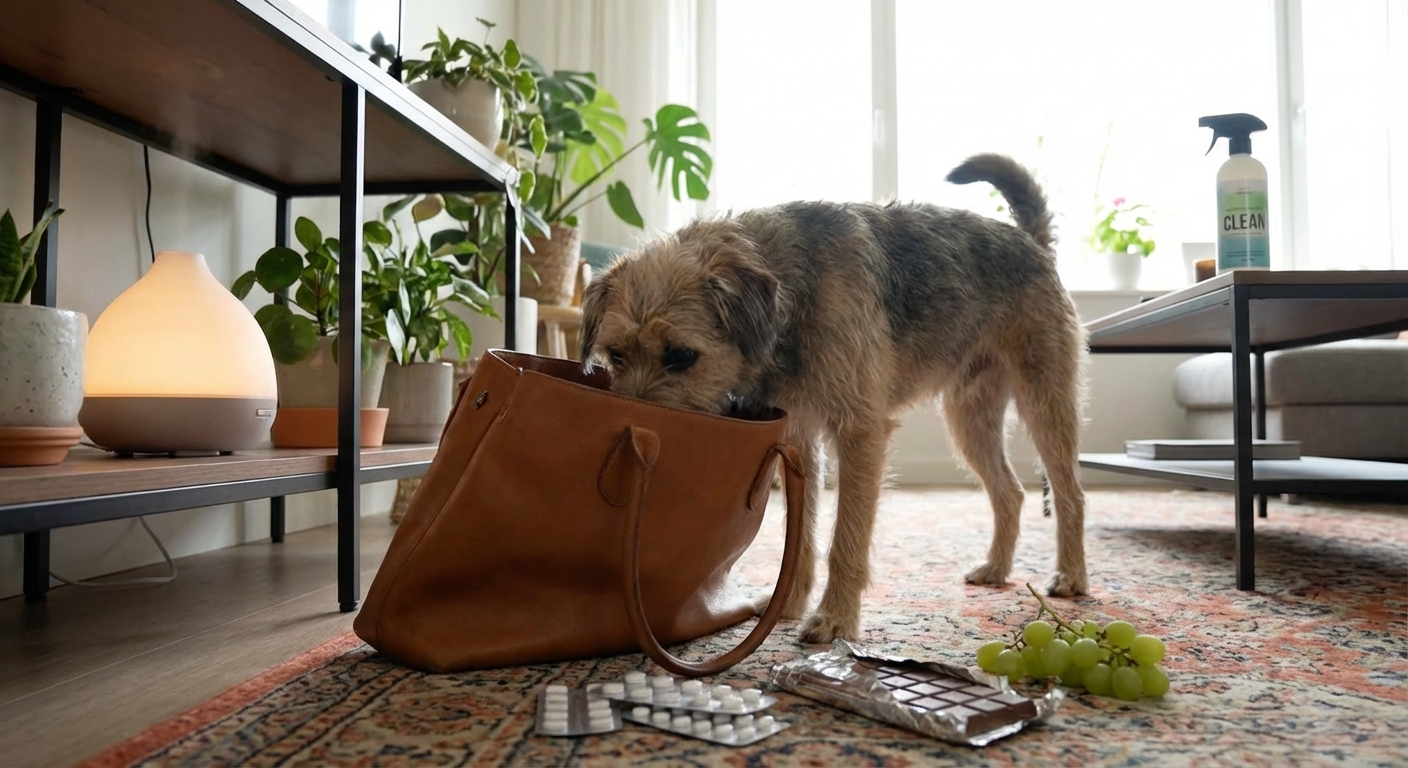
Most pet parents would never knowingly expose their animals to harm—yet many homes contain common foods, plants, and products that can make pets seriously ill. Because dogs and cats explore with their mouths and noses, their risk of accidental poisoning or injury is higher than ours.
Danger Often Hides in Plain Sight
This list‑style guide walks room by room through typical hazards, highlighting symptoms to watch for and safer alternatives. Knowing what to remove, secure, or supervise around can prevent emergency vet visits and heartache.
Kitchen Culprits
1. Chocolate
Toxic component: Theobromine and caffeine
- Dark and baking chocolate are most dangerous.
- Symptoms: Restlessness, vomiting, diarrhea, rapid heart rate, seizures.
Keep all chocolate out of reach, including cocoa powder and chocolate‑covered snacks.
2. Xylitol (Now Also Labeled as Birch Sugar)
Found in:
- Sugar‑free gum and candies
- Some peanut butters
- Baked goods, mouthwashes, and toothpaste
In dogs, xylitol can cause a rapid, life‑threatening drop in blood sugar and liver failure.
Symptoms: Weakness, vomiting, collapse, seizures.
3. Grapes, Raisins, and Currants
Even tiny amounts can trigger acute kidney failure in some dogs.
Symptoms: Vomiting, lethargy, decreased appetite, reduced urination.
4. Onions, Garlic, Chives, and Leeks
These allium vegetables can damage red blood cells in both dogs and cats.
- Risky in any form: raw, cooked, powdered.
- Symptoms may appear days later: weakness, pale gums, rapid breathing.
5. Alcohol and Unbaked Bread Dough
Ethanol is rapidly absorbed in pets.
- Alcoholic drinks, mouthwash, and fermenting dough are all risky.
- Symptoms: Disorientation, vomiting, tremors, coma.
Living Room and Home Office Hazards
6. Essential Oils and Diffusers
Certain oils (tea tree, eucalyptus, citrus, cinnamon, pennyroyal, wintergreen) can be toxic—especially to cats.
Risks:
- Respiratory distress from diffusers
- Skin and liver toxicity from direct contact or ingestion
Use pet‑safe products sparingly and never apply oils directly to your animal without veterinary guidance.
7. Batteries
TV remotes, toys, and key fobs often tempt chewers.
- Button batteries can cause severe burns in the mouth and esophagus.
- Larger batteries can leak corrosive chemicals.
Secure devices and store spare batteries in closed cabinets.
8. Electrical Cords
Puppies, kittens, and some adult pets chew cords.
- Risk of burns, shocks, and fires.
Use cord protectors, conceal wiring, and provide ample chew toys.
9. Small Objects and Children’s Toys
Marbles, Lego bricks, hair ties, and small balls can cause dangerous blockages.
Cats are particularly drawn to string, ribbon, and hair elastics—these can cause "linear foreign bodies" in the intestines, requiring surgery.
Bedrooms and Bathroom Dangers
10. Human Medications
Both over‑the‑counter and prescription medications are major sources of pet poisonings.
Top offenders include:
- Pain relievers (ibuprofen, naproxen, acetaminophen)
- Antidepressants
- ADHD medications
- Sleep aids
Never leave pills in bags, on nightstands, or loose in pockets.
11. Cosmetics and Personal Care Products
- Medicated creams (especially those with steroids or estrogen)
- Retinoid/retinol products
- Minoxidil hair growth treatments
Ingestion or skin exposure can cause hormonal imbalances, stomach upset, or more serious toxicity.
12. Cleaning Products
Even "natural" cleaners can be irritating.
Risks:
- Bleach and ammonia fumes damage lungs.
- Toilet bowl tablets and floor cleaners can poison pets that drink from the toilet or lick surfaces.
Always rinse surfaces thoroughly and keep pets away until areas are dry.
Laundry Room and Garage Risks
13. Fabric Softener Sheets and Laundry Pods
- Contain detergents that can burn mouths and throats.
- Tempting texture for cats and dogs.
Store in closed containers out of reach.
14. Antifreeze (Ethylene Glycol)
- Sweet taste, highly toxic even in tiny amounts.
- Found in car radiators, some winterizing solutions.
Symptoms: Drunken gait, vomiting, rapid breathing, kidney failure.
15. Rodent Poisons
These baits are designed to be attractive and deadly.
Types include:
- Anticoagulants (cause internal bleeding)
- Bromethalin (brain swelling)
- Cholecalciferol (severe calcium imbalance and kidney failure)
Secondary poisoning can occur if pets eat poisoned rodents.
16. Fertilizers, Pesticides, and Herbicides
Even "pet‑safe" labels often require keeping animals off treated areas until dry.
Ingestion can cause gastrointestinal upset, neurologic symptoms, or worse.
Plants That Don’t Belong in Pet Homes
17. Lilies (Especially for Cats)
True lilies (Easter, tiger, Asiatic, daylilies) are extremely toxic to cats.
- Ingesting or licking pollen, leaves, or water from the vase can cause fatal kidney failure.
Avoid lilies entirely in cat households.
18. Sago Palm
All parts, especially seeds, are toxic to dogs and cats.
Symptoms: Vomiting, diarrhea, liver failure.
19. Aloe Vera, Dieffenbachia, and Philodendron
These popular houseplants can cause drooling, vomiting, and mouth irritation.
20. Tulip and Daffodil Bulbs
Dogs that dig in gardens may chew bulbs.
- Can cause gastrointestinal upset, drooling, and in larger amounts, heart or breathing issues.
Holiday and Seasonal Hazards
21. Tinsel, Ribbon, and Ornament Hooks
Especially dangerous for cats.
- Tinsel and string can cut through intestines.
- Hooks can puncture the mouth, throat, or stomach.
22. Holiday Foods
- Rich, fatty dishes increase pancreatitis risk.
- Bones can splinter and cause blockages or tears.
- Grapes, raisins, xylitol desserts, and alcohol are frequent holiday culprits.
23. Fireworks and Seasonal Stress
Not toxic, but a major health concern.
- Noise anxiety leads to panicked escapes and injuries.
- Some pets develop destructive behaviors or self‑harm.
Work with your vet on anxiety plans before holidays—consider calming supplements, pheromones, or medication.
Outdoor and Yard Hazards
24. Standing Water and Puddles
- May contain leptospirosis bacteria, parasites, or algae toxins.
- Risk increases after heavy rain or in warm climates.
Vaccination and supervised outdoor time help reduce risks.
25. Foxtails and Grass Awns
These barbed seed heads can:
- Lodge in paws, ears, eyes, or noses
- Migrate under the skin, causing infections
Check your dog thoroughly after walks in dry, grassy areas.
Breed‑ and Species‑Specific Vulnerabilities
- Small dogs and cats are more easily overdosed by small amounts of toxins.
- Brachycephalic breeds (Pugs, Bulldogs, Persians) are more sensitive to fumes and heat.
- Herbivorous pets (rabbits, guinea pigs) have unique plant sensitivities; never assume dog‑safe equals safe for them.
When in doubt, call your vet or a pet poison hotline.
What to Do If You Suspect Poisoning
Act Quickly, But Don’t Panic
- Remove access to the suspected toxin.
- Check for packaging and note product names, ingredients, and how much might be missing.
Call immediately:
- Your veterinarian or nearest emergency clinic - Or a pet poison hotline (e.g., ASPCA Animal Poison Control in the U.S.)
Never induce vomiting or give home remedies like milk or activated charcoal unless a veterinarian instructs you to. Some substances cause more damage coming back up.
Making Your Home Safer—Practical Steps
- Store medications, cleaning products, and chemicals in closed cabinets or high shelves.
- Keep handbags and backpacks with gum, snacks, and pills off the floor.
- Choose pet‑safe plants and avoid lilies entirely if you live with cats.
- Supervise high‑risk chewers and curious young animals.
- Learn your nearest 24/7 emergency clinic location before you need it.
Protecting pets from hidden hazards doesn’t mean living in fear or stripping your home bare. With awareness and a few thoughtful changes, you can create a space that’s both comfortable and safe—so your furry companion can explore, snooze, and play without danger lurking in every corner.