
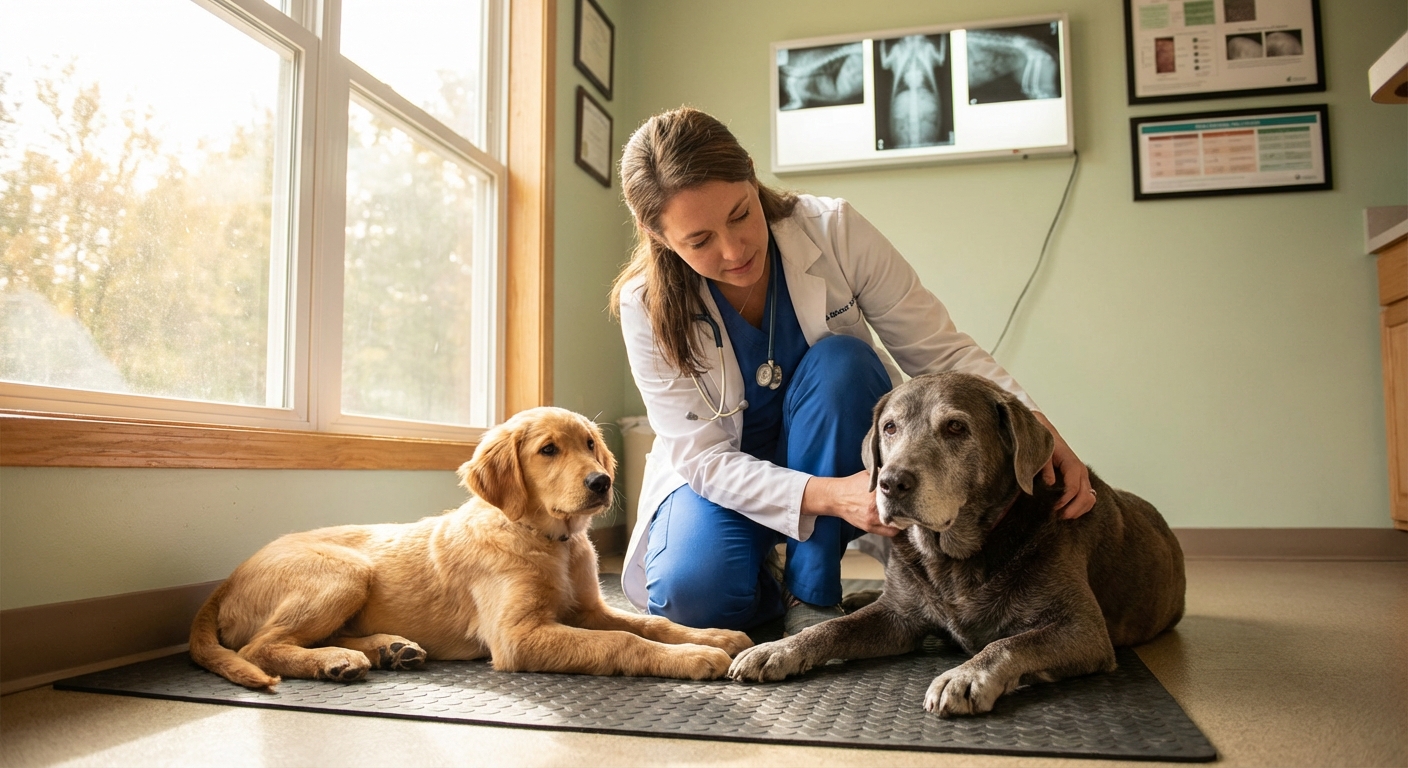
The needs of a wobbly eight‑week‑old puppy or kitten are worlds apart from those of a dignified 12‑year‑old companion. Yet many care routines don’t evolve much over time, leaving health problems either under‑addressed or missed entirely.
One Species, Many Life Stages
Understanding how requirements for nutrition, exercise, preventive care, and veterinary monitoring shift with age allows you to support your pet at every chapter of life. This guide compares puppy/kitten and senior care side by side, with notes for breed differences and common mistakes to avoid.
Veterinary Visits: From Vaccine Series to Senior Checkups
Early Life: Frequent Check‑Ins
Puppies and kittens typically see the vet every 3–4 weeks until about 16 weeks old for:
- Core vaccine series
- Parasite testing and deworming
- Growth monitoring and diet guidance
- Early behavior and socialization support
At this stage, missing visits can leave gaps in immunity and behavior development.
Golden Years: More Than Once a Year
Senior pets benefit from checkups every 6 months, even if they "seem fine."
Older animals often need:
- Twice‑yearly physical exams
- Routine bloodwork and urinalysis
- Blood pressure checks (especially cats)
- Screening for arthritis, dental disease, and cognitive changes
Early detection can add both years and comfort to their lives.
Nutrition: Growing Bodies vs. Aging Systems
Puppies and Kittens
Priorities:
- Adequate calories for growth without overfeeding
- Precise calcium and phosphorus for bone development
- High‑quality protein and essential fatty acids
Breed notes for dogs:
- Large‑breed puppies (Labradors, Great Danes, German Shepherds) need large‑breed puppy formulas to avoid bone and joint problems.
- Toy‑breed puppies may need more frequent meals to prevent low blood sugar.
Adult and Senior Pets
As pets age, metabolism slows and disease risks shift.
- Many adult pets need fewer calories than owners assume.
- Senior diets often focus on:
- Joint support (omega‑3s, glucosamine)
- Kidney support (especially in older cats)
- Digestive support (more fiber, highly digestible proteins)
Common mistake: Keeping older pets on calorie‑dense puppy or kitten food, which can accelerate weight gain and strain joints and organs.
Exercise and Play: Building vs. Preserving Strength
Young Animals: Controlled Chaos
Exercise is essential for:
- Muscle and bone development
- Healthy weight
- Social skills and confidence
But more isn’t always better, especially for large‑breed puppies.
Guidelines:
- Avoid repetitive high‑impact activities (like long runs or frequent jumping) during growth.
- Focus on short, varied play sessions and controlled leash walks.
Kittens benefit from climbing structures, wand toys, and puzzle feeders to channel hunting instincts.
Seniors: Gentle, Regular Movement
For older pets, the goal shifts from building to maintaining.
Benefits of low‑impact exercise:
- Preserves muscle mass and joint mobility
- Supports heart and brain health
- Helps manage arthritis and weight
Options:
- Short, frequent walks on soft surfaces
- Swimming or underwater treadmill (for dogs)
- Daily interactive play for cats, tailored to their tolerance
Common mistake: Assuming seniors "don’t need" exercise and letting them become sedentary, which worsens joint stiffness and weight gain.
Teeth and Gums: Start Young, Don’t Stop
Puppies and Kittens: Habits for Life
Milk teeth and teething issues aside, this is the perfect time to:
- Introduce toothbrushing gradually
- Offer appropriate chew toys (avoid very hard items that could fracture teeth)
- Get comfortable with mouth exams
Adults and Seniors: High‑Risk Years
Dental disease typically becomes noticeable by age three, especially in small‑breed dogs and some cats.
Senior pet concerns:
- Loose or painful teeth
- Tooth root abscesses
- Oral tumors
Maintain regular dental checkups and cleanings as recommended by your vet; they’re not a cosmetic luxury but a medical necessity.
Behavior and Mental Health: Socialization vs. Cognitive Support
Young Pets: The Socialization Window
The first months of life heavily influence a pet’s lifelong confidence.
For puppies (roughly 3–16 weeks):
- Positive exposure to people, animals, sounds, and environments
- Reward‑based training and handling
For kittens (roughly 2–7 weeks and beyond):
- Gentle handling by multiple people
- Introduction to carriers, nail trims, and brushing
Poor socialization can lead to fear, aggression, and anxiety later—even if genetics are good.
Seniors: Brain Health and Routine
Older pets can develop cognitive dysfunction (similar to dementia):
- Disorientation or getting "stuck" in corners
- Changes in sleep/wake cycles
- House‑soiling or forgetting learned behaviors
- Increased anxiety or vocalization at night
Support strategies:
- Consistent routines and predictable environments
- Environmental enrichment (food puzzles, gentle new smells)
- Vet‑recommended diets and supplements that support brain health
Preventive Care: Vaccines, Parasites, and Screening
Vaccines Across Life Stages
- Puppies/kittens: Need a full series with boosters to build immunity.
- Adults: Move to a regular schedule based on lifestyle and risk.
- Seniors: May need continued protection; age alone doesn’t equal immunity.
Work with your vet to tailor a vaccine plan to your pet’s age, breed, and environment.
Parasite Prevention
Young animals are especially vulnerable to parasites like roundworms, hookworms, and fleas. Regular deworming and preventives are crucial.
For seniors, parasite control remains important, but product choices may change based on kidney, liver, or neurological health.
Screening Tests
- Young pets: Fecal exams, heartworm tests, sometimes baseline bloodwork.
- Middle‑aged to senior pets: Annual or twice‑yearly bloodwork, urinalysis, blood pressure, and screening for diseases common in their breed.
Breed examples:
- Boxers, Dobermans: Heart disease screening
- Maine Coon, Ragdoll cats: Heart and kidney screening
- Siamese cats: Dental and respiratory monitoring
Home Environment: Safety for the Young, Comfort for the Old
Making Life Easier for Youngsters
- Puppy‑ or kitten‑proof your space: secure wires, trash, toxic plants, and small objects.
- Provide safe chew toys and scratching posts.
- Use baby gates, crates, or playpens to create structured safe zones.
Adapting for Seniors
- Add ramps or steps to favorite furniture and cars.
- Place non‑slip rugs on slick floors.
- Use low‑entry litter boxes for arthritic cats.
- Elevate food and water bowls for pets with neck or back pain.
Common mistake: Recognizing physical decline but not modifying the environment, inadvertently making everyday tasks painful.
What Stays the Same: Love, Observation, and Advocacy
Whether you’re teaching a puppy not to chew your shoes or helping a senior cat reach her sunny window perch, the constant is your role as observer and advocate.
Across all ages:
- Watch for subtle changes in behavior, appetite, and movement.
- Keep an open line of communication with your veterinarian.
- Adjust routines and expectations as your pet changes.
Puppy and kittenhood may be brief, and senior years can feel bittersweet—but each stage offers its own joys. When you tailor care to where your pet is in life, you honor the whole journey: the zoomies, the naps, and the quiet, contented moments in between.