
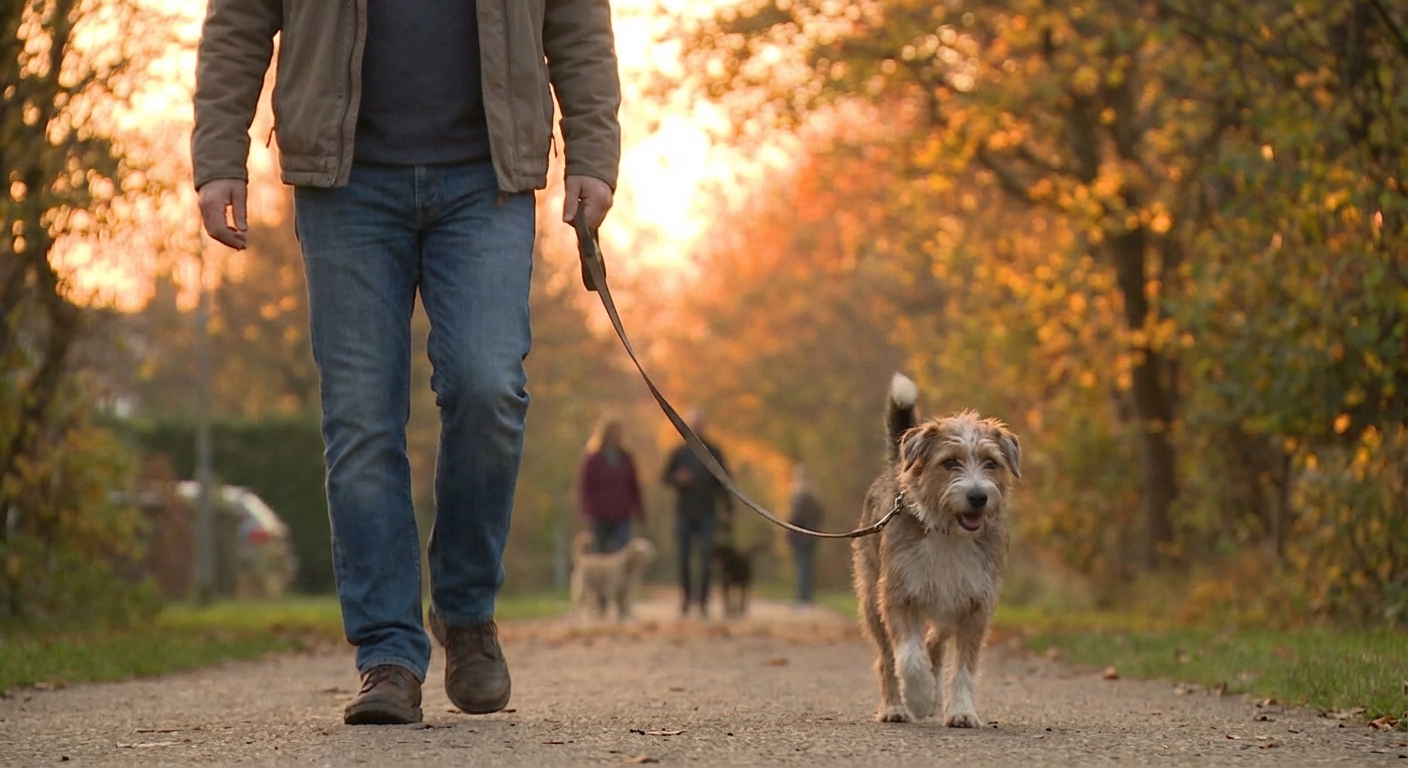
Leash pulling is one of the most common reasons guardians feel defeated by training. Walks that should be relaxing turn into arm‑stretching battles, embarrassment, or even danger.
Why Leash Training Feels So Hard (and Why It’s Worth It)
The good news: loose‑leash walking is a skill any dog can learn with patience, clear communication, and realistic expectations based on breed and temperament.
Step 1: Rethink What a “Good Walk” Looks Like
Many people imagine military‑precision heeling. Most pet dogs don’t need that. They need:
- A loose leash
- The ability to sniff and explore
- Guidance on how to handle exciting situations
A humane standard is: Your dog can walk on a slack leash beside or slightly ahead of you without dragging you, and you can get their attention when needed.
Vet note: Sniffing is mental exercise. Allowing sniff breaks can tire a dog out as much as physical exertion, supporting better joint and heart health without over‑exercise.
Step 2: Choose Gear That Supports Training, Not Force
Recommended
- Front‑clip harness: Helps redirect pulling without pressure on the neck
- Standard 4–6 ft leash: Avoid retractable leashes during training—too much inconsistency
Use With Care or Avoid
- Back‑clip harnesses: Comfortable but can encourage pulling in strong dogs
- Choke, prong, and shock collars: Associated with increased fear, anxiety, and potential injury; not recommended by modern veterinary behaviorists
If your dog is very strong, work with a positive trainer to choose humane equipment that protects your body while you train new habits.
Step 3: Teach Leash Skills Indoors First
Trying to teach loose‑leash walking for the first time on a busy street is like learning to drive on a racetrack.
Foundations Inside
- Clip on the leash and stand still.
- The moment your dog looks at you or moves toward you, mark ("Yes!") and treat.
- Take one step. If the leash stays loose, mark and treat by your side.
- Gradually increase steps between rewards.
You’re building a simple equation: “Staying near you makes food and fun happen.”
Step 4: The “Stop and Tree” and “Change Direction” Methods
Once outside, your dog’s pulling is often fueled by excitement and habit.
Method A: Stop and Tree
Become a boring tree when the leash tightens.
- Dog pulls → you stop walking.
- Say nothing; hold the leash steady.
- When your dog looks back or slackens the leash, mark and reward.
- Begin walking again.
Over time, your dog learns that pulling stops progress; staying close keeps the walk moving.
Method B: Change Direction
For dogs who get frustrated by stopping:
- Dog pulls ahead.
- Cheerfully say, “This way!” and turn 180 degrees.
- Reward your dog for catching up to you and walking by your side.
This turns you into the most interesting part of the environment.
Step 5: Use Sniff Breaks as a Powerful Reward
Instead of fighting your dog’s desire to sniff, harness it.
- Walk a short distance with a loose leash.
- If they stay in position, say, “Go sniff!” and walk them over to an interesting area.
Sniffing becomes the reward for good leash manners, not the reason for pulling.
Breed‑Specific Leash Training Tips
Scent Hounds (Beagles, Bassets, Coonhounds)
- Their noses are deeply wired to follow odors
- Use extremely high‑value treats outdoors
- Build frequent “go sniff” breaks into walks as earned rewards
Herding Breeds (Border Collies, Australian Shepherds)
- Mentally intense, easily overstimulated
- Practice attention games ("watch me," hand target) in low‑distraction areas first
- Consider outlet sports (agility, herding games) so walks aren’t their only excitement
Northern Breeds (Huskies, Malamutes)
- Bred to pull—it’s in their genetic job description
- A properly fitted front‑clip harness and consistent training are essential
- For strong pullers, consider a separate outlet like canicross or urban mushing, using different gear and cues to distinguish "pull now" from "walk politely now"
Toy Breeds (Chihuahuas, Pugs)
- Short legs and fragile necks: harnesses are safer than collars
- Streets can feel overwhelming—start in very quiet areas
- Be patient about short distances; mental effort may tire them quickly
Common Leash Training Mistakes to Avoid
1. Inconsistent Rules
If sometimes you let your dog pull (when you’re in a hurry) and other times you get angry, they receive a mixed message.
Choose a standard and stick with it:
- Either train every walk, or designate specific times and gear for “free sniff” walks.
2. Yanking or Jerking the Leash
This can injure your dog’s neck, spine, or trachea—especially in small breeds and brachycephalic dogs (pugs, bulldogs).
It also often adds excitement or fear, which increases pulling or reactivity.
3. Expecting Too Much Too Soon
Many dogs need weeks or months to become truly reliable on leash, especially adolescents.
- Celebrate micro‑progress: one calm block, then two
- Keep early walks short and close to home
4. Ignoring Fear and Overwhelm
If your dog freezes, cowers, or lunges at triggers (dogs, bikes, cars):
- Don’t force them closer to the scary thing
- Create distance until they can observe calmly
- Pair triggers with treats at a safe distance
For persistent or severe reactivity, consult a fear‑free trainer or veterinary behaviorist.
Vet‑Backed Safety Considerations on Walks
- Avoid intense exercise in puppies before growth plates close (often 12–18 months, depending on breed). Use more mental work than long, pounding runs.
- In hot weather, test pavement with your hand; if it’s too hot to hold for 7 seconds, it’s too hot for paws.
- Brachycephalic breeds (pugs, Frenchies) overheat easily. Keep walks shorter, avoid the hottest part of the day, and watch for labored breathing.
Leash training isn’t just about manners—it’s a cornerstone of physical safety and joint health throughout your dog’s life.
When Walks Become Enjoyable for Both of You
The payoff for this training is huge: safer outings, deeper trust, and a calmer dog whose needs are met without chaos.
Progress may feel slow some days. That’s normal. Keep sessions short, use rewards your dog truly cares about, and remember: a dog trotting happily on a loose leash beside you isn’t showing dominance or submission—they’re showing understanding.
And that’s exactly what good training is: clear, kind understanding between two species sharing one leash.