
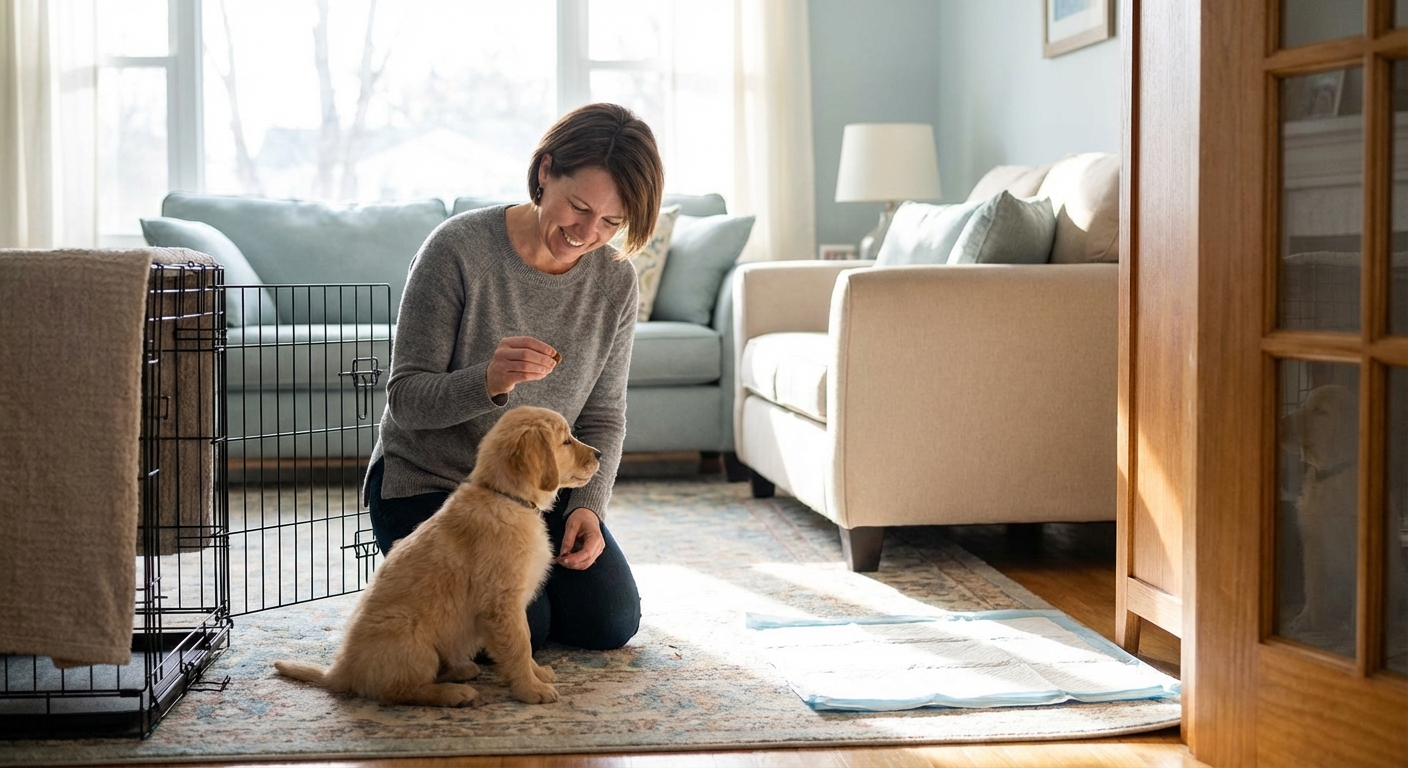
Few challenges frustrate pet guardians more than accidents in the house. Yet for your puppy, rescue dog, or even adult cat, toileting is not a moral issue—it’s biology and habit.
Why House Training Is Emotional—for You and Your Pet
Approached kindly, house and crate training become chances to deepen trust rather than damage it. This guide blends veterinary insight with practical, step‑by‑step strategies.
Understanding How Pets Learn Toilet Habits
Dogs
Dogs naturally avoid soiling their sleeping area—if the space is appropriately sized and they’ve been given enough chances to relieve themselves elsewhere.
Most puppies can hold their bladder for:
- Roughly their age in months + 1 hours (up to about 8 hours for adults)
- Less at night, during excitement, or with small/toy breeds
Cats
Cats instinctively bury waste, but they may avoid the litter box if:
- The box is dirty or scented
- The location feels unsafe
- They have pain (urinary issues, arthritis)
Vet warning: Sudden changes in housetraining can be a sign of medical problems. Always rule out health issues with your veterinarian before assuming it’s “just behavior.”
Step‑by‑Step House Training for Dogs
1. Set a Predictable Schedule
Take your dog outside:
- First thing in the morning
- After meals
- After play
- After waking from naps
- Before bed
- Every 1–2 hours during the day
For young puppies, add:
Use the same door and same toileting area whenever possible.
2. Supervise or Safely Confine Indoors
If your dog is free‑roaming indoors and has accidents, that’s a training issue, not defiance.
Use:
- Baby gates to keep them in the same room as you
- A crate or playpen when you can’t supervise closely
If they start circling, sniffing intensely, or walking away from play, immediately and calmly guide them outside.
3. Reward at the Right Time
Timing matters.
- Go outside with your dog.
- When they begin to eliminate, stay calm and quiet.
- Right after they finish, praise softly and deliver a treat.
You want them to think, “Going here, in this spot, makes good things happen.”
4. Use a Consistent Cue (Optional)
As your dog starts to squat, you can softly say, “Go potty” or a phrase of your choice. Over time, this becomes a cue that encourages them to eliminate on command.
Crate Training: Creating a Safe Den, Not a Jail
A crate can be a cozy retreat and powerful training aid—if introduced with care.
Choosing the Right Crate
- Size: Large enough for your dog to stand, turn around, and lie comfortably—but not so large that they can use one corner as a bathroom.
- Type: Wire crates offer visibility and ventilation; plastic crates feel more den‑like.
- Comfort: Add a washable bed or blanket once you’re confident about bladder control.
Introducing the Crate Positively
- Place the crate in a common living area, door propped open.
- Toss treats or scatter kibble just inside the door.
- Gradually toss treats further inside, letting your dog choose to enter.
- Feed meals in the crate with the door open.
When they are comfortable going in and out:
- Close the door for a minute while they’re calmly eating, then open before they finish.
- Slowly extend closed‑door time in tiny increments.
Common mistake: Forcing a scared dog into a crate. This can create long‑term crate aversion and anxiety.
How Long Is Too Long?
General guidelines (individual variation applies):
- 8–10 weeks: Up to 1 hour
- 11–14 weeks: Up to 2 hours
- 15–16 weeks: Up to 3–4 hours
- Over 6 months: Up to 4–6 hours (with adequate exercise and toileting)
Crates should never replace exercise, human interaction, or bathroom breaks.
Handling Accidents Calmly and Productively
If You Catch Your Dog in the Act
- Say nothing or a neutral "Whoops!"—avoid yelling.
- Gently guide or carry them outside to their toilet spot.
- If they finish there, praise and reward.
If You Find It After the Fact
- Take a breath. Do not punish.
- Use an enzymatic cleaner to remove odor at the molecular level.
- Review your schedule and supervision. The mistake is in the plan, not the pet.
Why not scold? Pets don’t connect delayed punishment with past actions. They learn you’re unpredictable, which can lead to sneaky behavior and damaged trust.
Special Considerations by Breed and Age
Toy Breeds (Chihuahuas, Yorkies, Pomeranians)
These dogs have tiny bladders and may need more frequent potty breaks or indoor options (pee pads, turf boxes) even as adults.
Large and Giant Breeds (Great Danes, Mastiffs)
They mature more slowly. Hip and joint issues can also complicate toileting. Keep surfaces non‑slippery and avoid stairs if your vet advises.
Senior Dogs
Older dogs may:
- Need more frequent bathroom trips
- Have arthritis or cognitive decline
Talk to your vet about pain management and supportive tools. Use mats and clear pathways to the door.
Rescue and Former Outdoor Dogs
These dogs may not understand indoor rules yet.
- Treat them like a large puppy: schedule + supervision + rewards
- Avoid assumptions about their past training
- Be extra patient—stress and transition can temporarily affect bladder control
Litter Box Training and Troubleshooting for Cats
Litter Box Basics
General rule: Number of cats + 1 = minimum number of boxes.
Key factors:
- Size: Bigger is better; many commercial boxes are too small
- Location: Quiet, low‑stress areas away from food and water
- Litter: Unscented, fine‑grained clumping is often best tolerated
- Maintenance: Scoop at least once daily; full change and wash weekly
If Your Cat Stops Using the Box
First: see your veterinarian immediately. Urinary tract disease can be life‑threatening, especially in male cats.
If medical issues are ruled out, consider:
- Box aversion (too small, covered, or dirty)
- Stress (new pets, guests, changes in routine)
- Pain (arthritis may make high‑sided boxes hard to enter)
- A larger, low‑entry box
- Additional boxes in different locations
- Feliway or other calming aids (with your vet’s guidance)
Offer:
Punishment is never appropriate; it increases stress and often worsens the problem.
Common Myths That Sabotage House Training
- “Rubbing their nose in it teaches them.”
It teaches fear of you, not appropriate potty spots.
- “They know they did wrong because they look guilty.”
That “guilty” look is appeasement—your pet reading your anger, not understanding the accident.
- “Crates are cruel.”
When introduced kindly and used for reasonable periods, crates function as cozy dens many dogs choose to rest in.
Progress, Not Perfection
House and crate training take time, especially with young puppies, seniors, and rescues. Set realistic expectations, celebrate small wins, and remember: your pet is not giving you a hard time—they’re having a hard time learning a very human rule.
With patience, veterinary guidance when needed, and a compassionate approach, you’ll build habits and trust that last a lifetime.