
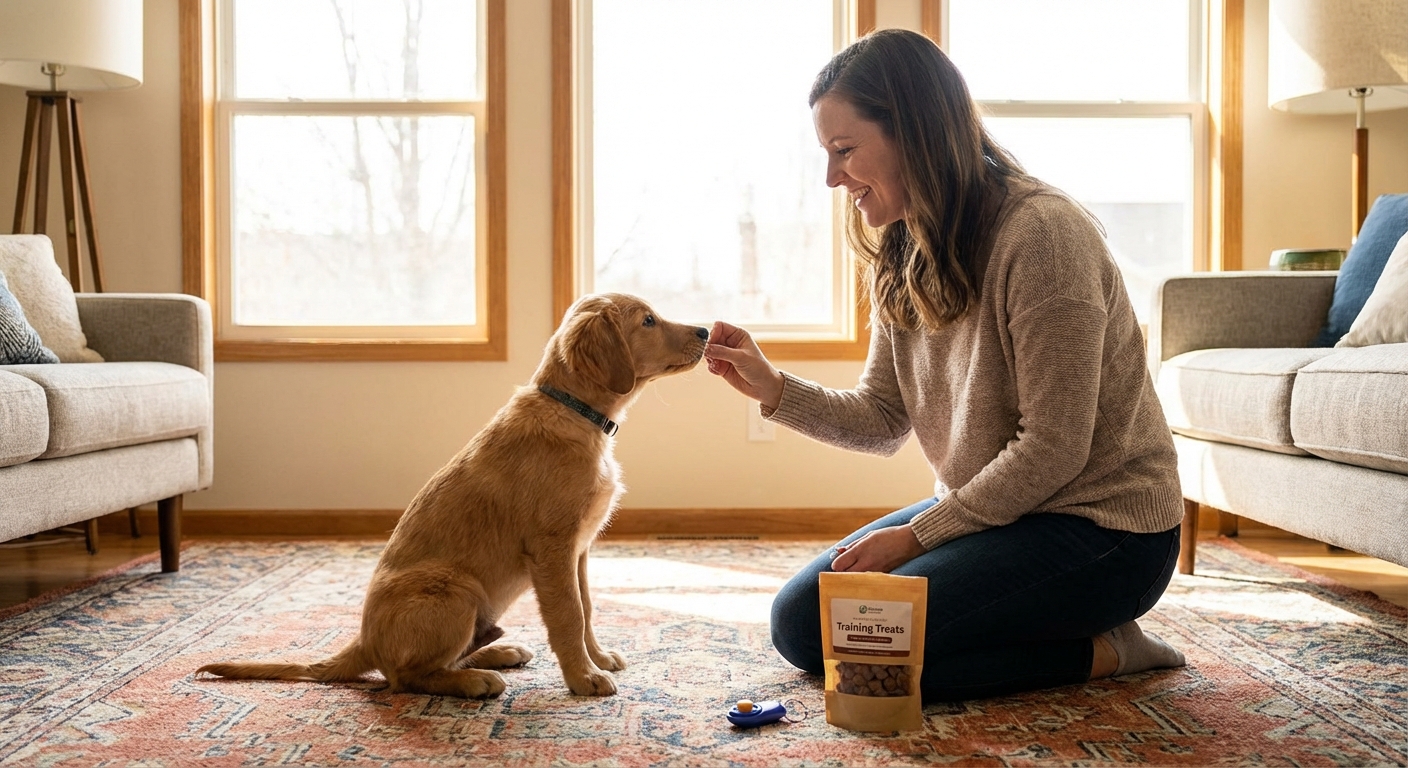
Training is more than teaching a dog to sit or stay—it’s about building a shared language grounded in trust. When you approach training with patience and empathy, your dog doesn’t just learn cues; they learn that you are safe, consistent, and worth listening to.
Building a Training Foundation Your Dog Can Trust
This guide walks you step‑by‑step through a humane training process that veterinarians and behaviorists recommend for long‑term success.
Step 1: Set Up Your Environment for Success
Before teaching any cue, set the stage.
Choose a Low‑Distraction Space
Start in a quiet room with minimal distractions. Avoid crowded parks or busy living rooms with children running around. Dogs—especially puppies—struggle to focus in chaotic environments.
Vet insight: Many “stubborn” dogs are actually overstimulated or anxious. A calmer environment reduces stress hormones like cortisol, making it easier for your dog to learn.
Gather Your Tools
- Small, soft, high‑value treats (chicken, cheese, commercial training treats)
- A clicker or a consistent marker word ("Yes!" or "Good!")
- A flat collar or harness and a standard 4–6 ft leash
- Optional: treat pouch for ease and timing
Avoid prong, choke, or shock collars. Studies increasingly show that aversive tools can increase fear and anxiety, which often leads to more behavior problems.
Step 2: Learn to Reward Like a Pro
Your rewards are your dog’s paycheck. Pay well and pay on time.
Find the Right Reward
Not all dogs are food‑motivated to the same degree. Experiment with:
- Food: small, smelly, and soft
- Play: tug games, fetch
- Social: praise, petting (for dogs who enjoy touch)
Tip: Most dogs will work hardest for food, especially in new or challenging situations.
Timing Is Everything
The reward must immediately follow the behavior you like—ideally within 1–2 seconds.
- Use a clicker or a marker word the moment your dog does the correct behavior.
- Then deliver the treat right after.
This helps your dog connect, “When I do THIS, good things happen.”
Step 3: Teach the Core Cues (and Why They Matter)
1. Name Recognition
This is your dog’s “pay attention” cue.
- Say your dog’s name once.
- The moment they look at you, mark ("Yes!") and treat.
- Repeat several times in short sessions.
Goal: Your dog swings their head toward you whenever they hear their name.
2. Sit
“Sit” is a foundation behavior that can replace jumping and impulsive behavior.
- Hold a treat to your dog’s nose.
- Slowly move your hand upward and slightly back over their head.
- As their nose follows, their rear should naturally lower.
- The moment they sit, mark and treat.
- Add the word “Sit” just before you lure, once the motion is predictable.
3. Down
“Down” helps promote calmness.
- Ask for a sit.
- Move a treat from their nose down to the floor between their paws.
- Slowly slide the treat out away from them. As they follow it, their body should stretch into a down.
- Mark and treat.
- Add the word “Down” once they’re offering the behavior more readily.
4. Come (Recall)
Recall is a lifesaving cue.
- Start indoors on a short distance.
- Say your cue word once ("Come!" or "Here!") in a bright, happy voice.
- When your dog starts moving toward you, mark and reward generously—several treats, praise, maybe a quick game.
- Never call your dog for something they hate (like punishment). Recall should always predict good things.
Vet note: Reliable recall lets you safely give your dog more freedom, exercise, and enrichment—key factors for long‑term physical and mental health.
Step 4: Use Short, Frequent Sessions
Dogs learn best with short, focused training.
- 3–5 minutes per session
- 2–5 sessions per day
- End sessions while your dog is still engaged and successful
Watch for signs of fatigue or frustration: turning away, scratching, sniffing, slow responses. If you notice these, take a break and try again later.
Step 5: Generalize to Real Life
Dogs don’t automatically understand that “Sit” in the kitchen means “Sit” at the park.
Change One Variable at a Time
- Practice in different rooms.
- Then in the yard.
- Then on quiet walks.
- Gradually add mild distractions (a person walking by, a toy on the floor).
Reward more heavily in harder environments. Think of it as a “cost of living adjustment” for your dog’s paycheck.
Breed‑Specific Nuances
Herding Breeds (Border Collies, Aussies, Corgis)
- Often highly trainable but mentally intense
- Benefit from jobs: agility, herding games, scent work
- May fixate on movement—work on impulse control around bikes, joggers, kids
Hounds (Beagles, Dachshunds, Coonhounds)
- Famous for “selective hearing”—they follow their noses
- Use extra‑high‑value treats for recall
- Training in fenced areas or long‑line leashes is safer
Toy Breeds (Chihuahuas, Yorkies, Pomeranians)
- Can be just as smart, but often underestimated
- Small size doesn’t mean low needs—provide mental enrichment and clear boundaries
- Be gentle with their bodies; avoid harsh jerks on leash
Guardian & Working Breeds (Rottweilers, Mastiffs, Shepherds)
- Need early, positive socialization and consistent training
- Respond well to clear structure and calm, confident handling
- Avoid punishment; these breeds may develop fear‑based reactivity if mishandled
Every dog is an individual. Use breed tendencies as a guide, not a rulebook.
Common Training Mistakes to Avoid
1. Repeating Cues Over and Over
Saying “Sit sit sit sit” teaches your dog to ignore the word. Say it once, wait a few seconds, then help them with a lure or reset.
2. Punishing Normal Dog Behaviors
Chewing, barking, and digging are natural. Instead of scolding:
- Provide chew toys
- Teach a “quiet” cue and meet exercise needs
- Designate a digging area or use enrichment like snuffle mats
3. Inconsistent Rules
If one family member allows couch time and another scolds for it, your dog gets confused. Agree on house rules and stick to them.
4. Training Only When There’s a Problem
Ongoing training keeps skills sharp and strengthens your bond. Sprinkle mini training sessions into daily life—before meals, at the door, during walks.
5. Ignoring Medical Causes
If your dog suddenly becomes irritable, fearful, or resistant to training, speak to your veterinarian. Pain, thyroid issues, and other medical problems can drastically change behavior.
When to Ask for Professional Help
Seek a fear‑free, positive‑reinforcement‑based trainer or veterinary behaviorist if you notice:
- Aggression (growling, snapping, biting)
- Severe separation anxiety
- Compulsive behaviors (tail‑chasing, constant licking)
- Extreme fear or shutdown behavior
Early intervention often prevents issues from worsening and protects both humans and animals.
Training as a Lifelong Conversation
The most beautifully trained dogs aren’t perfect—they’re understood. When you slow down, reward generously, and listen to your dog’s emotions as much as their actions, training becomes a two‑way conversation.
Keep sessions short, joyful, and compassionate. Your dog doesn’t care if you’re a professional trainer—they care that you’re present, kind, and consistent. That’s how you turn confusion into confidence, one cue at a time.