
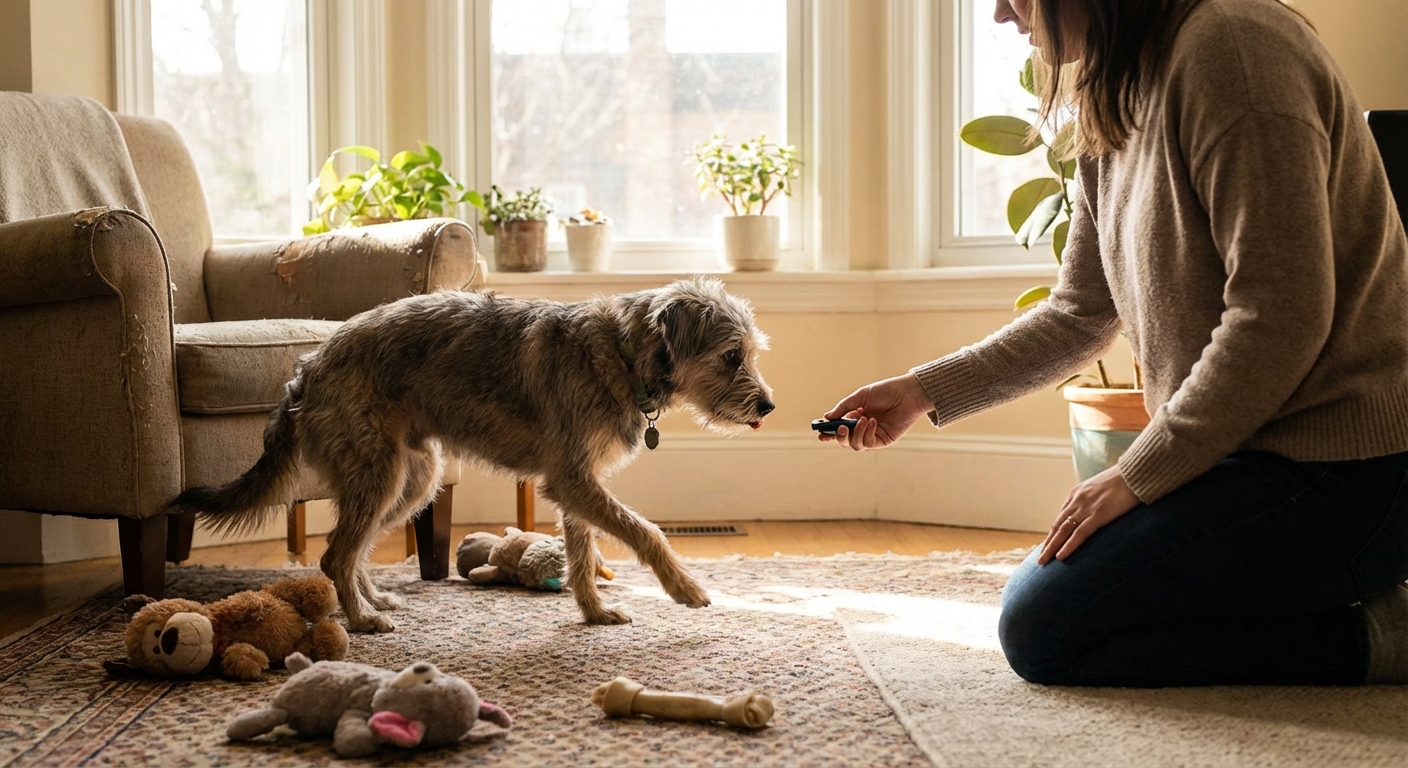
Many traditional training approaches focus on obedience: sit, down, stay, heel. While these cues are useful, they don’t tell the whole story. A dog who sits on command but trembles at new sounds, or a cat who comes when called but hides from guests, needs more than compliance—they need confidence.
Training Through Your Pet’s Eyes
Fear‑free training is about teaching your pet that the world is safe, predictable, and full of choices. Behavior then improves as a side effect of reduced anxiety.
The Science: Stress, Learning, and Your Pet’s Brain
When animals are frightened, their bodies release stress hormones like cortisol and adrenaline. These chemicals:
- Prepare muscles to run or fight
- Narrow the brain’s focus to survival
- Make it harder to process new information
Veterinary insight: Chronic stress weakens the immune system, disrupts digestion, and aggravates skin and GI conditions. Calm, confident pets are often healthier pets.
That’s why fear‑based methods (yelling, shock collars, leash corrections) may stop a behavior in the moment but often create new problems—like aggression, shutdown, or anxiety.
Core Principles of Fear‑Free Training
- Use positive reinforcement: Reward the behaviors you like with food, toys, or affection.
- Manage the environment: Prevent your pet from practicing unwanted behavior.
- Respect body language: Stop or adjust when your pet looks worried.
- Train at your pet’s pace: Small steps, repeated often.
This approach works for dogs, cats, rabbits, birds, and more—any companion animal capable of learning from consequences.
Reading the Signs: Is Your Pet Stressed or Relaxed?
Dogs
Signs of stress or fear:
- Lip licking when there’s no food
- Yawning in tense situations
- Turning head away, whale eye (white of the eye showing)
- Tail tucked, ears pinned back
- Freezing or suddenly shutting down
- Loose, wiggly body
- Soft eyes and mouth
- Tail held at a natural height, wagging loosely
Signs of relaxation:
Cats
Signs of stress:
- Tail tucked or flicking sharply
- Ears sideways or flattened
- Dilated pupils in normal light
- Hiding, growling, or swatting
- Tail up with relaxed tip
- Slow blinks
- Kneading, purring (though purring can also appear in stress or pain)
Signs of comfort:
When in doubt, give more space and more time.
Step‑by‑Step Confidence Building: The “Ladder” Approach
Imagine teaching your pet to climb a ladder where each rung is just slightly more challenging than the last.
Step 1: Identify the Trigger
What worries your pet?
- Strangers
- Other dogs
- Nail clippers
- Car rides
- Vacuum cleaner
Write it down and be as specific as possible.
Step 2: Find the Safe Distance
Expose your pet to the trigger at a distance or intensity where they notice it but remain relaxed.
Examples:
- Dog‑reactive dog: watch other dogs from across a wide park
- Nervous cat: see a visitor sitting quietly from across the room
- Nail‑clipper‑shy pet: see the clippers on a table without any handling
At this level, pair the trigger with something wonderful: treats, play, gentle praise.
Step 3: Gradually Decrease Distance or Increase Intensity
Only once your pet consistently appears relaxed at the current level should you:
- Move a bit closer
- Increase volume (for noises)
- Add slight movement (for objects like vacuum cleaners)
If your pet’s body language shifts toward tension, you’ve climbed too fast. Step down a rung.
Common mistake: Flooding—forcing pets into their fears (e.g., dragging a dog into a crowd). This often backfires, cementing fear instead of resolving it.
Practical Fear‑Free Training Scenarios
1. Teaching a Dog to Accept Nail Trims
- Show clippers → treat. Repeat until tail wags when clippers appear.
- Touch the paw briefly → treat. Stop before your dog pulls away.
- Hold paw for 1–2 seconds → treat.
- Tap nail gently with the closed clipper → treat.
- Clip a single nail tip → jackpot of treats, then stop for the day.
Over days or weeks, build up to more nails per session, always staying under your dog’s stress threshold.
2. Helping a Shy Cat with Visitors
- Create safe spaces: high perches, hiding spots, separate room if needed.
- Before guests arrive, set up a treat station where the cat can see but keep their distance.
- Ask visitors to ignore the cat—no reaching, no staring.
- Occasionally toss a treat gently in the cat’s direction.
With repetition, visitors predict good things, not pressure.
3. Car Ride Confidence
- Feed your dog or cat treats near the parked car.
- Progress to treats inside the car with the engine off.
- Turn the engine on briefly while you feed treats.
- Take extremely short drives (around the block) followed by something pleasant.
If nausea is an issue, discuss anti‑nausea meds or supplements with your veterinarian.
Breed and Personality Considerations
Bold, Social Dogs
- May bounce back quickly from mild stress
- Benefit from clear boundaries to avoid overexcitement
- Still require gentle methods; punishment can turn outgoing into reactive
Sensitive or Reserved Dogs (e.g., many sighthounds, some herding breeds)
- Easily overwhelmed by harsh voices or physical corrections
- Thrive with quiet, predictable routines and soft handling
- May need extra decompression time after busy days
High‑Strung Toy Breeds
- Often carried away from scary situations instead of trained
- Need gradual exposure at their own pace, not forced interaction
- Benefit from reinforcement for calm behavior on a mat or in a carrier
Cats and Small Mammals
- Typically prefer choice and control over being restrained
- Training in very short sessions (30–60 seconds) can be most effective
- Use species‑appropriate rewards: tiny food bits, gentle play, or just distance from a trigger
Common Pitfalls When Trying to Train Fear‑Free
Moving Too Fast
If your pet suddenly shuts down or explodes, the steps are too big.
Inconsistent Family Rules
Everyone in the home must follow the same approach—no one should use punishment while others use rewards.
Ignoring Physical Health
Pain, vision loss, or hearing decline can all increase fear. Older pets especially may react to handling that once was fine. Regular veterinary checkups are crucial.
Expecting a “Perfect” Pet
Some animals will always be more reserved or wary. The goal is improvement and comfort, not changing their core personality.
When to Involve a Professional
Seek help from a veterinary behaviorist or qualified positive‑reinforcement trainer if:
- There has been a bite or serious scratch
- Fear interferes with daily life (no walks, no eating when guests are over)
- Your pet injures themselves trying to escape
- Progress stalls for weeks despite your efforts
Fear and anxiety are welfare issues, just like physical pain. Your pet deserves support.
Training as Emotional Support, Not Just Education
Fear‑free training asks a simple question: “How does this feel for my pet?” When the answer is, “Safe, predictable, and rewarding,” good behavior usually follows.
You’re not spoiling your pet by being kind. You’re creating an environment where their brain can truly learn—and where your relationship can truly thrive.
Over time, you’ll see the shift: a dog who looks to you for guidance instead of panicking, a cat who chooses to stay in the room instead of hiding, a rabbit who hops up for gentle handling instead of bolting.
That’s the quiet, powerful magic of confidence‑building training.