
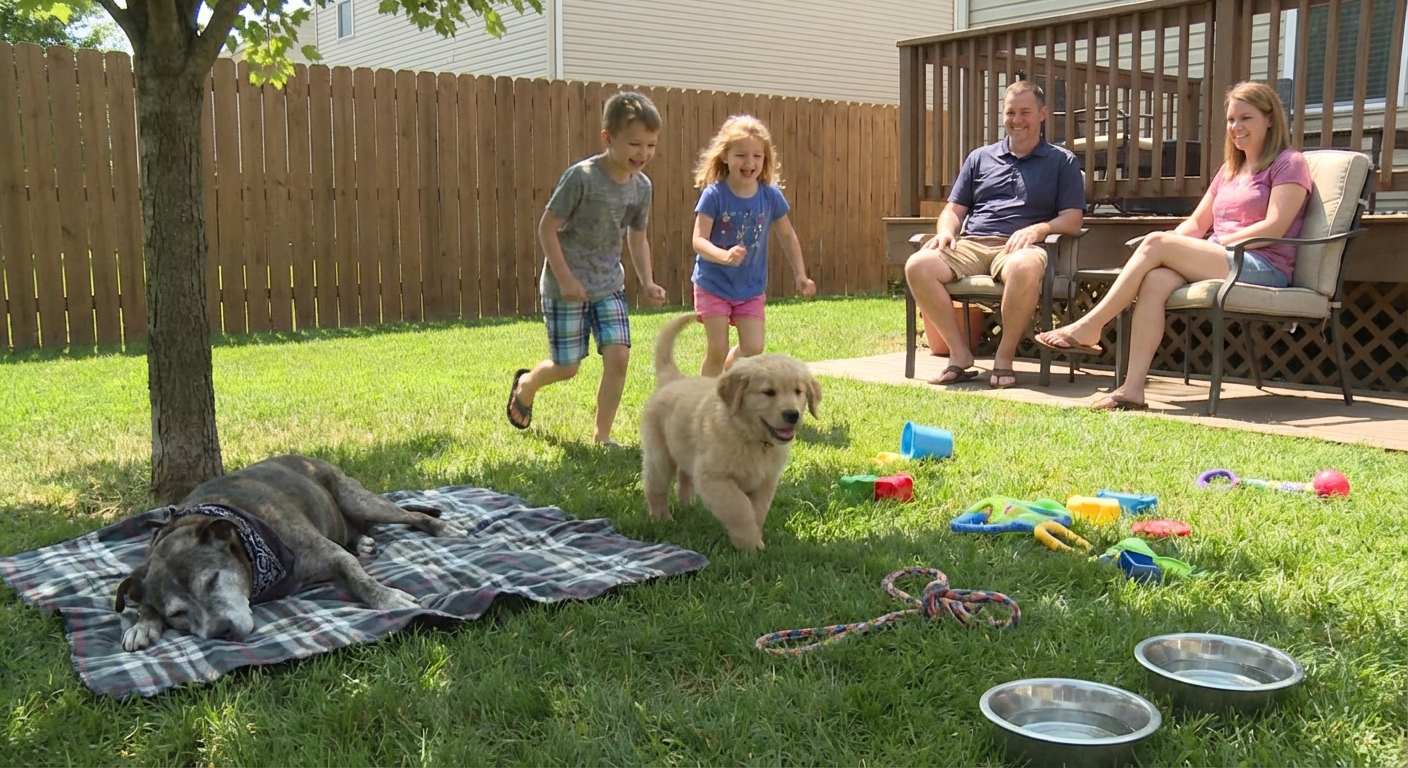
When people picture their future dog, they often imagine a roly‑poly puppy. But for many families, a calm adult or wise senior dog is actually a better match.
Life Stage Matters as Much as Breed
Veterinarians see unique health, behavior, and care needs at every life stage. Understanding these differences can help you decide whether a puppy, adolescent, adult, or senior dog is the best fit for your home—regardless of breed.
Overview of Dog Life Stages
While exact timing varies by breed size, we can roughly group dogs into:
- Puppy: Birth to 6–18 months
- Adolescent: ~6 months to 2–3 years
- Adult: 2–7 years (younger for giant breeds)
- Senior: 7+ years (earlier for giant breeds)
Each stage brings joys and challenges. Let’s compare them from a practical, day-to-day perspective.
Puppies: Adorable, Intense, and Time-Consuming
Pros of Getting a Puppy
- Shaping from the start: You can invest heavily in socialization and training to help shape adult behavior.
- Early bonding: Many people enjoy watching their dog grow and learn from day one.
- Predictability for some purebreds: Temperament and size can be more predictable when you know the parents.
Real-World Challenges
- House training: Expect frequent potty breaks—every 1–3 hours at first.
- Chewing and mouthing: Normal teething behavior can be hard for kids to handle.
- Sleep disruption: Young puppies may cry at night initially.
- Supervision needs: Puppies should not be left alone for long hours.
Vet insight: The critical socialization window (roughly 3–16 weeks) is when puppies are most open to positive new experiences. Missing this window can increase the risk of fear and anxiety later.
Best Homes for Puppies
- Households with time and patience for intensive training.
- People who can manage frequent vet visits, vaccines, and puppy-proofing.
- Families ready to supervise all interactions between young children and puppies.
Adolescents: The "Teenage" Phase
This stage is often underestimated. Many dogs surrendered to shelters are adolescents.
What to Expect
- Surges in energy: Even previously calm puppies may become wilder.
- Testing boundaries: Cues like "sit" and "come" may suddenly seem "forgotten."
- Chewing 2.0: As adult teeth settle and dogs explore, they may chew more again.
Pros of Adopting an Adolescent
- Past the tiniest, most fragile puppy stage.
- Still young and highly trainable.
- Personality is beginning to show more clearly.
Challenges
- Requires consistent training and patience.
- May be large and strong but mentally immature.
- Needs robust outlets for energy and curiosity.
Vet tip: Adolescent dogs benefit greatly from positive-reinforcement training classes and structured routines. This is a prime time to invest in their future behavior.
Adult Dogs: Often the Easiest Match
Adult dogs are frequently overlooked in favor of puppies, but they can be ideal for many families.
Pros of Choosing an Adult Dog
- More predictable temperament: Behavior patterns are more established.
- Established size: No surprises about how big they’ll get.
- Often house-trained: Many adults already understand basic cues.
- Lower intensity than puppies: Still playful, but generally less demanding.
Challenges
- Unknown history: Some adult dogs may come with fears or learned habits.
- Adjustment time: Moving to a new home can be stressful; expect a decompression period.
- Health screening: Have a vet thoroughly examine new adults for baseline health.
Vet insight: Many behavior issues can be improved with time, structure, and professional help. Don’t assume an adult dog "can’t change." Neuroplasticity—the brain’s ability to adapt—lasts well into adulthood.
Best Homes for Adult Dogs
- Busy people who prefer to skip intense puppy stages.
- Families wanting a known energy level and personality.
- First-time dog guardians who benefit from a more mature companion.
Senior Dogs: Gentle Souls With So Much to Give
Senior dogs often wait the longest in shelters, yet they can be some of the easiest and most rewarding companions.
Pros of Adopting a Senior Dog
- Calmer energy: Many are content with leisurely walks and lots of cuddles.
- Gratitude and connection: Caregivers often describe deep, immediate bonds.
- Predictable routines: Seniors are usually well past destructive phases.
Common Health Considerations
- Arthritis and joint stiffness
- Dental disease
- Vision or hearing changes
- Organ function changes (kidneys, heart, etc.)
Vet tip: Regular checkups, weight control, and pain management can greatly improve a senior dog’s quality of life.
Emotional Considerations
- Shorter time together can be a concern, but even a few good years deeply matter to a dog.
- Children can learn powerful lessons about empathy and caring for elders.
Best Homes for Seniors
- Quieter households or individuals.
- People who enjoy gentle walks and home time.
- Families ready for some extra medical care and a heart-first commitment.
Comparing Life Stages: What Fits Your Reality?
Time Investment
- Highest: Puppies and adolescents
- Moderate: Active adults
- More predictable but focused: Seniors (daily care plus medical oversight)
Training Needs
- Puppies: Everything is new; house training, social skills, basic cues.
- Adolescents: Reinforcing and refining; managing boundary-testing.
- Adults: Filling in gaps; fine-tuning manners.
- Seniors: Usually light training; sometimes re-teaching if senses decline.
Activity Levels
- Puppies: Bursts of energy with lots of naps.
- Adolescents: Often the most energetic stage.
- Adults: Varies by breed; generally stable.
- Seniors: Slower but still benefit from gentle activity.
Common Mistakes When Choosing a Life Stage
Picking a puppy for kids "to grow up with" without adult commitment
Dogs need consistent care well past childhood interests.
Underestimating adolescent challenges
Many families think something is "wrong" when normal teenager behavior appears.
Overlooking adult dogs because they’re less "cute"
Adults often integrate more smoothly than puppies.
Avoiding seniors only out of fear of loss
Loss is hard at any age, but the comfort you offer a senior dog is immeasurably valuable.
How to Decide What’s Right for You
Ask yourself:
- How many hours per day can I realistically devote to training and supervision?
- Do I mind accidents, chewing, and night wakings?
- Do I want a jogging partner, a couch companion, or something in between?
- Am I emotionally and financially prepared for future medical needs?
Then, talk to:
- Your veterinarian, for insight into health and care at each stage.
- Rescue groups and shelters, who can help match you with an individual dog’s personality and needs.
- Reputable breeders, if choosing a purebred puppy, to understand long-term commitments.
Any Life Stage Can Be the Right One
Whether you bring home a bouncy puppy, a spirited teenager, a steady adult, or a gray‑muzzled senior, the key is alignment with your true lifestyle and capacity.
Dogs don’t measure love in years; they measure it in kindness, comfort, safety, and companionship. When you choose a life stage with clear eyes and a compassionate heart, you give a dog the greatest gift: a home that understands them, exactly where they are in life.