
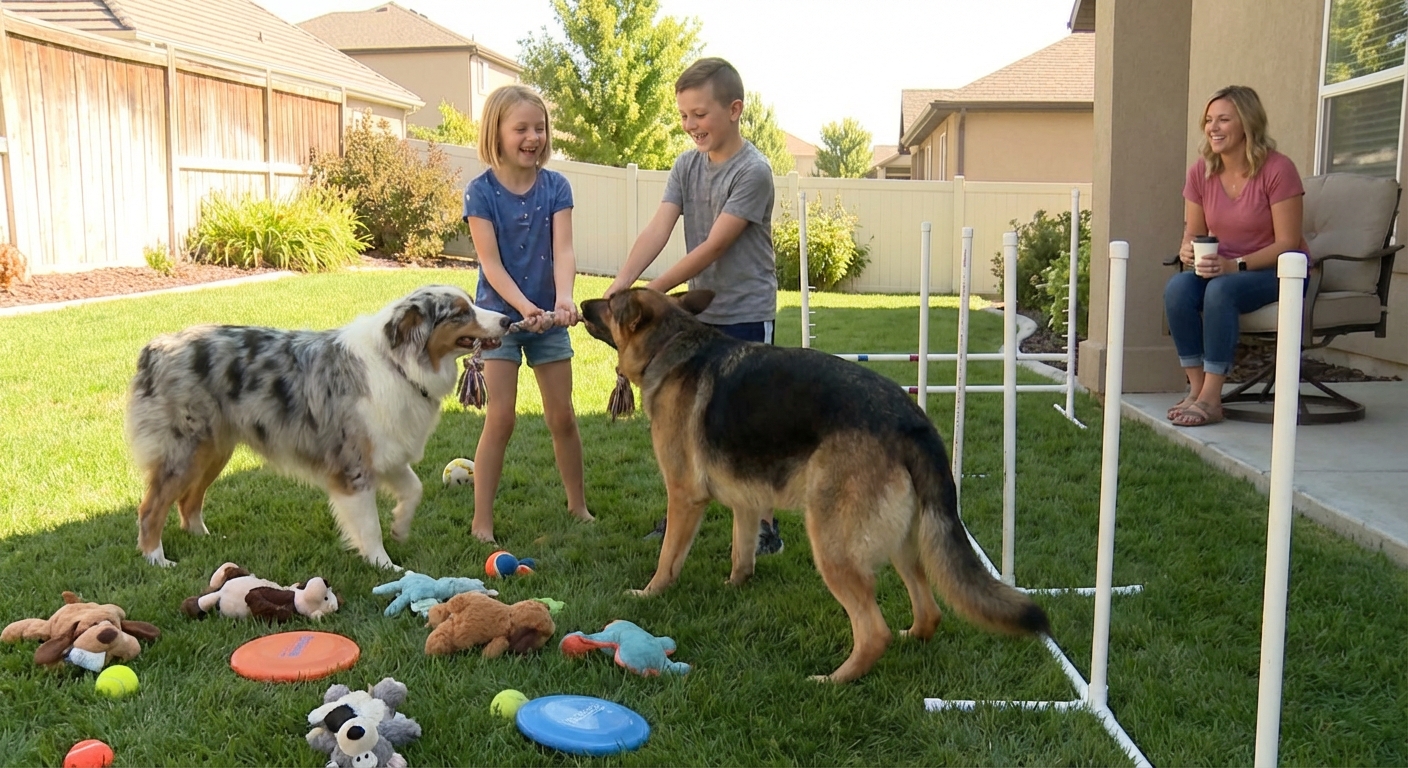
Working and herding breeds like Border Collies, Australian Shepherds, German Shepherds, Belgian Malinois, and many collies were developed to do a job all day, every day. Their instincts—herding, guarding, tracking, pulling, or protecting—are deeply wired.
What Makes a Working Dog Different?
When those strong instincts are placed in a modern pet home without thoughtful outlets, veterinarians and behaviorists often see:
- Destructive chewing or digging
- Hyperactivity and restlessness
- Nipping at heels or chasing kids and bikes
- Anxiety or reactivity
None of this means these dogs are "bad." It means they’re under-challenged, confused, or overwhelmed.
This guide will help you understand their needs and channel their incredible energy into a healthy, loving family life.
Common Types of Working Breeds
Herding Breeds
Examples: Border Collie, Australian Shepherd, German Shepherd (also in working group), Corgis, Collies, Belgian Shepherds.
Core traits:
- High intelligence and focus
- Strong motion sensitivity (chasing, herding)
- Often very people-oriented
Guardian and Protection Breeds
Examples: German Shepherd, Belgian Malinois, Rottweiler, Doberman Pinscher, livestock guardian dogs (Great Pyrenees, Anatolian Shepherd).
Core traits:
- Territorial or protective instincts
- Strong loyalty to family
- Often naturally suspicious of strangers
Sledding and Endurance Breeds
Examples: Siberian Husky, Alaskan Malamute.
Core traits:
- Tremendous stamina
- Love of running and pulling
- Independent decision-making
Scent and Search Breeds
Examples: German Shorthaired Pointer, Labrador Retriever (also family companion), many hounds.
Core traits:
- Powerful noses
- Need for mental and physical work
- Strong hunting or tracking drive
Daily Needs: More Than Just a Walk Around the Block
Veterinary behaviorists often say that for many working breeds, a simple walk is not enough.
1. Physical Exercise
Most working dogs need:
- At least 60–120 minutes of meaningful physical activity daily
- Opportunities to run, play, and explore safely
Good options include:
- Jogging or hiking with you (once physically mature)
- Structured fetch games with clear start/stop cues
- Flirt poles, tug games with rules, and off-leash play in secure areas
2. Mental Work
A mentally bored working dog is often more restless than a physically tired one.
Ideas:
- Nosework games (hide treats or toys to find)
- Puzzle feeders and snuffle mats
- Trick training (spin, bow, back up, weave between legs)
- Basic obedience and advanced cues (place, heel, stay with distractions)
Vet insight: Dogs bred for decision-making and problem-solving need regular challenges to prevent frustration and anxiety.
Channeling Instincts Instead of Punishing Them
Working breeds don’t misbehave out of spite. They’re often just doing the job their genetics tell them to do—with no guidance.
Herding and Chasing
Problem behaviors: Nipping at ankles, herding children, chasing cars, bikes, or cats.
What helps:
- Provide appropriate outlets: Herding balls, controlled fetch, agility or herding classes where possible.
- Teach impulse control: "Leave it," "stay," and "look at me" with strong rewards.
- Management: Fenced yards, leashes, and gates to prevent unsafe chasing.
Guarding and Protection
Problem behaviors: Barking excessively at visitors, lunging at strangers, overprotective behavior.
What helps:
- Early, positive socialization with varied people, places, and sounds.
- Clear rules about greetings (go to mat, then say hello calmly).
- Never encourage "tough" or "guard" behaviors in a pet home—this often backfires.
Vet warning: Protection sports and bite work should only be done under expert guidance and are rarely appropriate for average pet homes.
Digging, Chewing, and Escaping
Often signs of boredom, anxiety, or under-exercise.
What helps:
- Designated digging areas (a sandbox or dedicated patch)
- Durable chew toys and long-lasting, vet-approved chews
- Reinforced fencing, supervised outdoor time
Training: Your Lifeline With Working Breeds
These dogs generally love to learn—but they also quickly learn bad habits if left to their own devices.
Foundations to Teach Early
- Reliable recall (coming when called)
- Loose-leash walking
- Settle on a mat or bed
- Impulse control (wait at doors, leave dropped food alone)
Why Positive Methods Matter
Working breeds are sensitive and observant. Harsh punishment can:
- Increase anxiety and fear
- Damage trust
- Lead to more reactive or defensive behaviors
Reward-based methods build confidence and strengthen your bond.
Consider: Enrolling in group classes or working with a qualified positive-reinforcement trainer, especially during adolescence.
Living With Working Dogs in Families With Kids
These breeds can be wonderful family companions—with structure.
Safety and Respect
- Always supervise interactions with young children.
- Teach kids how to pet gently and when to leave the dog alone.
- Provide a "no-kid" safe zone (crate or room) where the dog can retreat.
Teaching Calm
- Reward the dog for lying quietly near the family.
- Use food puzzles or chews during busy family times.
- Avoid rough play that amps up excitement around children.
Common mistake: Allowing chase games between kids and dogs. This can reinforce herding, nipping, and overexcitement.
Health Considerations in Working Breeds
Joint and Orthopedic Issues
Many medium and large working breeds are prone to:
- Hip and elbow dysplasia
- Cruciate ligament tears
- Arthritis later in life
Prevention & care:
- Buy from breeders who perform recommended joint screenings.
- Maintain a lean body weight; extra weight stresses joints.
- Avoid intense jumping or long runs until growth plates close (ask your vet about timing).
Behavioral Health
Chronic under-stimulation can contribute to:
- Anxiety and compulsive behaviors (tail chasing, spinning, excessive licking)
- Noise phobias or separation anxiety
Vet tip: If you see these behaviors, ask your veterinarian about a referral to a certified behavior professional. Early help makes a big difference.
Common Mistakes Owners of Working Breeds Make
Choosing a working breed as a "status dog"
These dogs are not lifestyle accessories; they require serious time and effort.
Underestimating exercise needs
A quick walk around the block is rarely enough.
Allowing free access to the yard and calling it enrichment
A bored dog in a yard often becomes a digging, barking, fence-fighting dog.
Punishing instinctive behaviors instead of redirecting them
Work with the dog’s nature, not against it.
Skipping socialization because the dog seems "tough" or "confident"
Even bold breeds need careful, positive exposure to the world.
Are Working Breeds Right for You?
Working and herding dogs shine in homes where they:
- Have at least one active, engaged human
- Get daily mental and physical enrichment
- Receive kind, consistent training
- Are given jobs—formal or informal—to do
If you love the idea of training, exercise, and partnership, a working breed can be one of the most rewarding companions you’ll ever have.
If your lifestyle is quieter or more sedentary, consider breeds—or individual dogs—whose needs better match your energy. There’s no shame in choosing a dog whose instincts fit your reality.
Honoring who these dogs were bred to be is one of the most compassionate choices we can make—for them and for ourselves.