
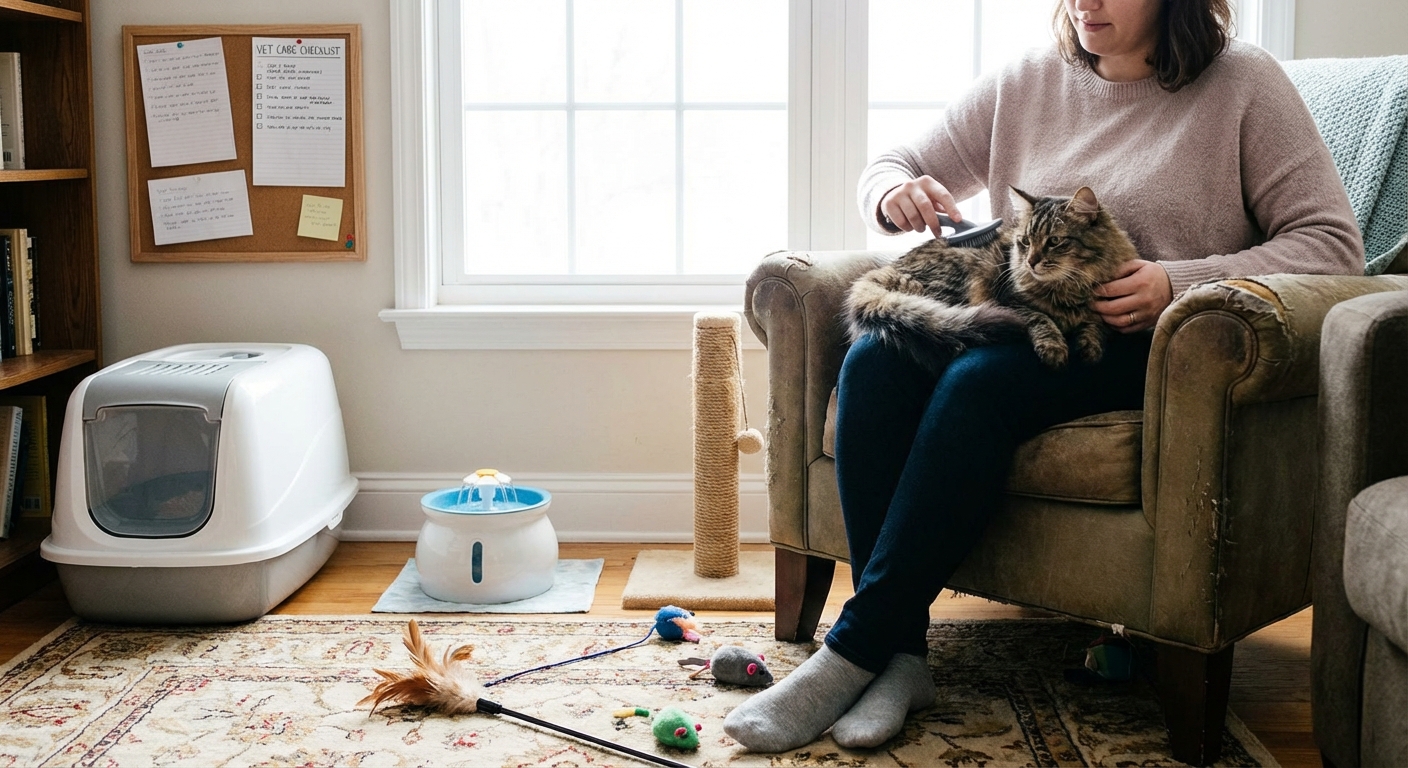
Most cat owners love deeply, but many rely on instinct rather than informed routines. Cats are subtle; small changes in daily care can dramatically affect their comfort and lifespan.
Why Daily Habits Matter More Than Occasional Effort
These ten habits are drawn from what veterinarians say they most wish cat guardians would do consistently.
1. Schedule (and Keep) Routine Vet Visits
Healthy‑seeming cats still need regular exams.
- Kittens: every 3–4 weeks until vaccines are complete
- Adults (1–7 years): once a year
- Seniors (7+ years): every 6 months
Vets can detect heart murmurs, dental disease, weight changes, and early kidney or thyroid issues before symptoms are obvious.
Action step: Put your cat’s next wellness exam on your calendar now and set a reminder.
2. Measure Every Meal
Free‑feeding or “topping off” bowls leads to slow but steady weight gain.
Vet insight: Obesity is one of the most common and preventable cat health issues; it shortens lifespan and worsens arthritis, diabetes, and urinary disease.
Use a measuring cup or kitchen scale and ask your vet:
- Ideal weight for your cat
- Daily calories required
Then divide that into 2–4 meals per day. Adjust every few months based on body condition.
3. Prioritize Wet Food and Hydration
Cats are descended from desert animals and often don’t drink enough water on their own.
Benefits of including wet food:
- Higher moisture supports urinary tract and kidney health
- Often more satiating per calorie
- Can help prevent crystals and urinary blockages, especially in male cats
Practical tips:
- Offer at least one wet meal daily.
- Use wide, shallow bowls; some cats dislike whisker contact with deep bowls.
- Try a cat-safe water fountain; many cats prefer moving water.
4. Maintain a Clean, Cat‑Friendly Litter Box
Litter box stress is a major source of behavior and medical problems.
Golden rules:
- Number of boxes: At least one per cat, plus one extra
- Location: Quiet but accessible; avoid putting boxes next to loud appliances
- Cleaning: Scoop at least once daily; wash boxes weekly with mild, unscented soap
- Size: Big enough for your cat to turn around easily; most commercial boxes are too small
Avoid strong scents and heavy deodorizers; they’re more for humans than for cats and can drive cats away from the box.
5. Make Playtime a Daily Ritual
Play isn’t a luxury; it’s a behavioral necessity.
Structured play:
- Reduces boredom and destructive scratching
- Helps with weight management
- Strengthens your bond
Try this routine:
- Use a wand toy to mimic hunting (stalk, chase, pounce).
- Let your cat “catch” the toy at the end.
- Offer a few treats or part of a meal afterward to complete the hunt sequence.
Two 10–15 minute sessions per day work wonders.
6. Groom with Purpose, Not Just for Shedding
Brushing does more than reduce hair on your sofa.
Benefits:
- Prevents painful mats, especially in long‑haired cats
- Allows you to check skin for lumps, bumps, and parasites
- Strengthens trust when done gently and positively
Vet tip: Sudden grooming changes (over‑grooming or stopping grooming) can signal pain, stress, or illness and deserve a vet visit.
Short‑haired cats often need brushing a few times a week; long‑haired breeds may require daily care.
7. Protect Dental Health Early
Dental disease is extremely common by age three—and it hurts.
Signs include:
- Bad breath
- Drooling
- Dropping food or chewing on one side
- Pawing at the mouth
Good habits:
- Ask your vet to show you how to brush your cat’s teeth with pet‑safe toothpaste.
- Use dental treats or diets approved by veterinary dental organizations, if brushing isn’t possible.
- Schedule professional cleanings as recommended.
Even small improvements in dental care significantly improve comfort and overall health.
8. Create Vertical, Safe Spaces
Cats are both predator and prey in nature; height makes them feel secure.
Offer:
- Cat trees or sturdy wall shelves
- Window perches with safe screens
- Elevated resting spots away from children or other pets
Breed note: Active and curious breeds like Bengals, Abyssinians, and Siamese especially need vertical territory to stay mentally and physically satisfied.
9. Watch for Subtle Behavior Changes
Because cats hide vulnerability, changes may be your first—and only—clue that something is wrong.
Monitor for:
- Avoiding jumps they used to do easily
- Hiding more or being unusually clingy
- Changes in appetite, thirst, or litter box habits
- New aggression or withdrawal
Keep a simple notebook or phone log of changes; this helps your vet see patterns over time.
10. Respect Their Communication and Boundaries
Kindness in cat care means listening to their body language.
Learn common signals:
- Slow blink: relaxation and trust
- Tail up, slightly curled tip: friendly greeting
- Ears back, tail flicking: discomfort or overstimulation
Avoid forcing affection. Many cats prefer short, frequent interactions rather than long cuddling sessions. Let your cat approach you, and reward gentle contact.
Common Pitfalls to Avoid
- Using punishment (yelling, spraying water) instead of understanding the cause of behavior
- Switching foods abruptly, leading to stomach upset
- Ignoring routine parasite prevention for indoor cats
- Assuming hairballs are always “normal” rather than checking for underlying issues
Small Shifts, Big Impact
Cat care doesn’t need to be complicated. These ten habits, practiced consistently, create a foundation of safety, comfort, and trust. Over time your cat will feel better, behave more predictably, and deepen their bond with you.
Choose one or two habits to refine this week, then build from there. Your cat can’t thank you with words, but you’ll see their gratitude in relaxed postures, bright eyes, and quiet companionship at your side.