
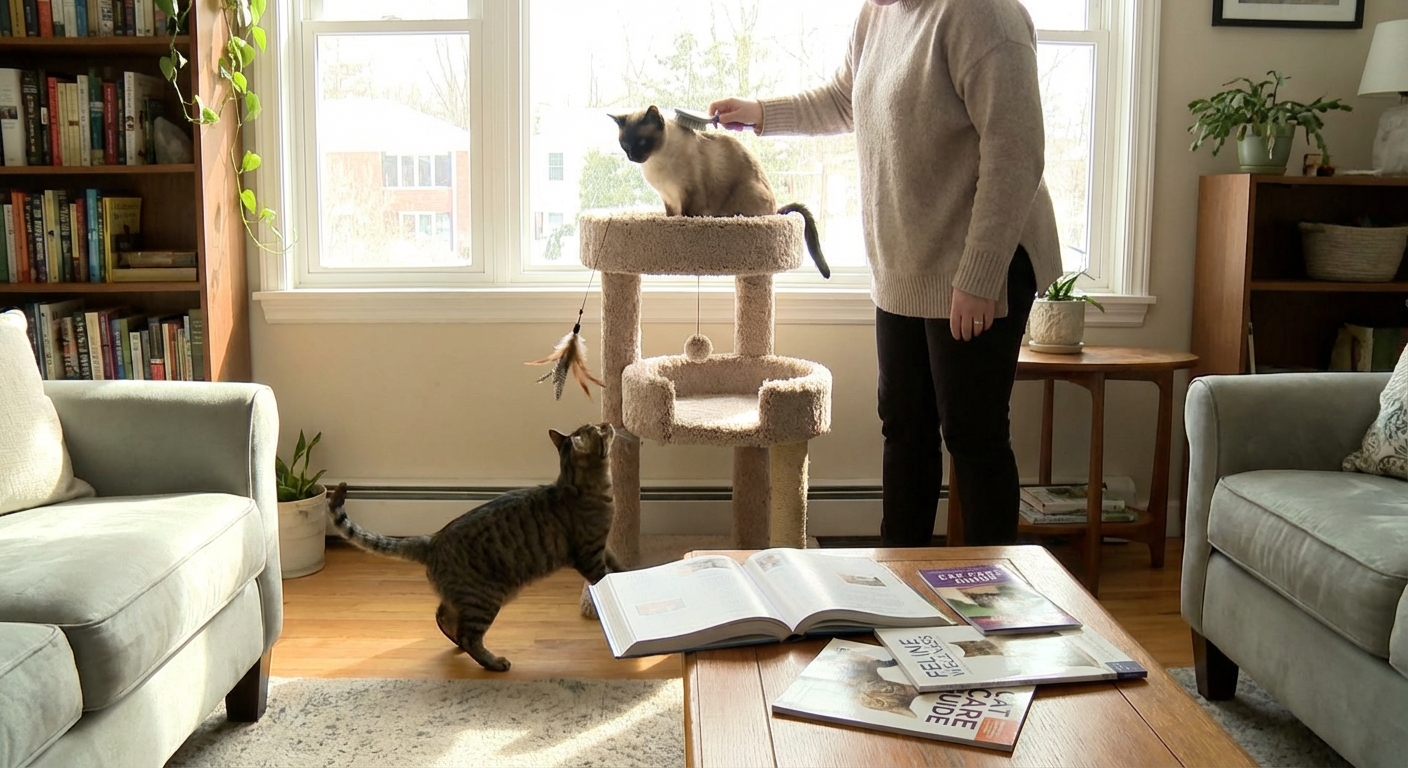
Every cat is an individual, but breed and body type influence health risks, grooming needs, and behavior. Understanding these patterns helps you anticipate issues before they become problems.
Why Breed (and Type) Matters in Cat Care
This guide groups cats by type—domestic shorthair, longhair, flat‑faced, large, and high‑energy breeds—and explores specific care strategies.
Domestic Shorthair Cats: The Everyday Athlete
Domestic shorthairs (DSH) are the mixed‑breed cats you see most often in shelters. Their genetic diversity usually gives them robust health, but they still have needs.
Typical Traits
- Short, low‑maintenance coat
- Wide range of personalities
- Often excellent hunters when given the chance
Care Focus
- Weight management: DSH indoor cats often gain weight silently. Monitor body condition monthly.
- Play: Many shorthairs remain active into their senior years; aim for daily interactive play.
- Health screening: Their mix of genetics makes regular veterinary exams important to catch issues that won’t be predictable by breed.
Common mistake: Assuming a shorthair’s coat doesn’t need grooming. Weekly brushing still helps reduce shedding and allows for skin checks.
Long‑Haired Breeds: Beauty with Extra Maintenance
Breeds like Persians, Ragdolls, and Maine Coons boast luxurious coats that require committed care.
Grooming Essentials
- Daily to every‑other‑day brushing with a slicker brush and wide‑tooth comb
- Focus on friction zones: armpits, behind ears, groin, and belly
- Start grooming rituals early in life with treats and gentle handling
Vet insight: Mats aren’t just cosmetic—they pull on the skin, cause pain, and can hide infections or parasites.
Health Considerations
- Maine Coon and Ragdoll: Higher risk of hypertrophic cardiomyopathy (HCM), a heart disease. Ask your vet about screening if you have a purebred.
- All longhairs: At risk of hairballs and intestinal blockages.
Prevention tips for hairballs:
- Regular grooming to reduce loose hair
- Hairball-control diets or gels (discuss with your vet)
- Adequate hydration through wet food and fresh water
Flat‑Faced (Brachycephalic) Cats: Persian, Exotic Shorthair & Friends
Flat‑faced cats are charming with their big eyes and short noses—but these features often mean extra care.
Breathing and Eye Care
- Monitor for noisy breathing, snoring, or open‑mouth breathing.
- Clean tear staining and eye discharge gently with a warm, damp cloth.
- Use unscented, dust‑reduced litter to minimize respiratory irritation.
Vet insight: Brachycephalic cats may be more sensitive to heat and stress due to compromised airways. Keep them in cool, well‑ventilated areas and avoid overexertion.
Dental and Skin Fold Care
- Crowded teeth increase the risk of dental disease; schedule regular dental checkups.
- Gently clean facial folds to prevent infections.
Common mistake: Assuming noisy breathing is “normal” for the breed. Labored or rapidly worsening breathing is always an emergency.
Large and Heavy Breeds: Maine Coon, Norwegian Forest, Ragdoll
These gentle giants carry extra weight even when lean, putting added stress on joints and hearts.
Joint and Mobility Support
- Provide non‑slip flooring around favorite jump points.
- Use steps or ramps to beds and high perches.
- Consider joint supplements (like omega‑3s or specific joint nutraceuticals) in consultation with your vet.
Nutrition and Growth
- Large breeds mature more slowly; they may benefit from kitten food up to 15–18 months.
- Avoid rapid weight gain; slow, steady growth is healthier for joints.
Heart Health
HCM is more common in certain large breeds.
- Ask your vet about periodic heart auscultation and, if indicated, echocardiography.
- Report signs like lethargy, labored breathing, or sudden hind‑leg weakness immediately.
High‑Energy and Vocal Breeds: Siamese, Bengal, Abyssinian, Oriental
These cats often act more like extroverted roommates than quiet house pets.
Mental Stimulation
- Daily interactive play is non‑negotiable.
- Rotate puzzle feeders and foraging toys.
- Offer vertical spaces like shelves and tall trees.
Behavior tip: Without enough stimulation, these breeds may resort to attention‑seeking behaviors—yowling, knocking items off shelves, or destructive scratching.
Social Needs
Many of these breeds thrive on close human or feline companionship.
- Consider adopting them in compatible pairs if your lifestyle is busy.
- Incorporate training (sit, high‑five, come) using clickers and treats. They are often highly trainable.
Common mistake: Expecting a Siamese or Bengal to behave like a quiet lap cat without investing in interactive time.
Hairless Breeds: Sphynx and Friends
Hairless cats come with a different but equally important maintenance list.
Skin and Temperature Care
- Skin accumulates oils; most Sphynx cats need regular gentle baths, often weekly.
- Use cat‑safe, moisturizing shampoos recommended by your vet.
- Provide warm clothing or heated beds in cooler climates; they chill easily.
Sun and Surface Protection
- Limit direct sun exposure to prevent burns.
- Use soft bedding to avoid skin irritation on hard surfaces.
Vet insight: Hairless cats may need more frequent ear cleaning, as they lack hair that typically traps debris.
Tailoring Routine Care to Breed Type
Regardless of breed, every cat needs core basics. But how you deliver them can be breed‑savvy.
Nutrition: One Size Does Not Fit All
- Large, heavy breeds: Watch joint health and avoid excessive calories.
- High‑energy breeds: May do better with more frequent, smaller meals and puzzle feeding.
- Long‑haired breeds: Hairball‑control formulas may help.
Your veterinarian can help you choose a diet tailored to both your cat’s breed tendencies and their individual health profile.
Environment: Match the Cat, Not the Furniture
- Long‑haired and heavy breeds: Sturdy furniture and wide perches.
- High‑energy cats: Vertical mazes, interactive toys, and safe outdoor enclosures.
- Shy or flat‑faced breeds: Quiet, cozy hiding spots away from household chaos.
Common Breed‑Specific Mistakes to Avoid
- Choosing by looks alone without researching grooming or health needs.
- Under‑stimulating active breeds, leading to behavior problems mistaken for “bad temperament.”
- Skipping insurance or savings for breeds prone to costly conditions like HCM or brachycephalic airway issues.
- Over‑grooming or harsh bathing of hairless breeds, damaging their skin barrier.
- Assuming mixed‑breeds have no special needs—individual history and body type still matter.
Loving the Cat in Front of You
Breed knowledge is a helpful guideline, not a rulebook. Mixed‑breed cats may show traits from multiple types; purebreds can be delightful exceptions to the stereotype.
Use what you know about breed tendencies to ask better questions:
- “Could this be joint pain?” for a heavy Maine Coon
- “Is this breathing normal?” for a Persian
- “Is my Siamese getting enough mental stimulation?”
With curiosity, veterinary partnership, and compassionate attention to your cat’s unique personality, you can offer care that honors both their heritage and their individuality.