
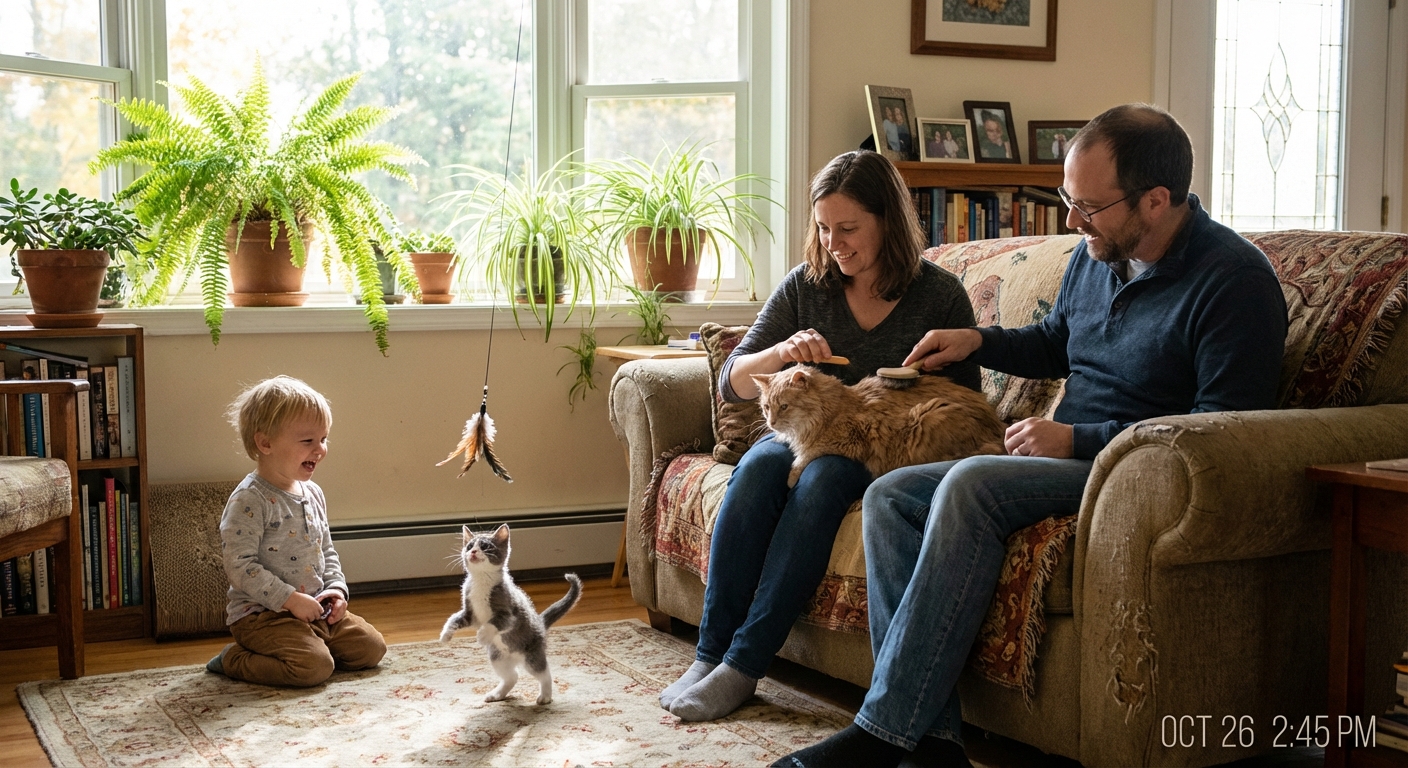
Caring for a cat isn’t just about food, water, and a litter box. Cats move through distinct life stages—kitten, adult, senior—and their physical and emotional needs change along the way. Knowing what to expect helps you support a long, comfortable, and joy‑filled life.
Understanding Your Cat’s Needs at Every Life Stage
Veterinarians typically divide cat life stages as:
- Kitten: 0–12 months
- Young Adult: 1–6 years
- Mature Adult: 7–10 years
- Senior/ Geriatric: 11+ years
Each stage has unique nutritional, behavioral, and medical needs. Let’s walk through them in a warm, practical way.
Kitten Care: Building the Foundation
Nutrition for Growing Bodies
Kittens need more calories, protein, and certain nutrients than adults.
Vet insight: Kittens require higher levels of protein, fat, and DHA for brain and eye development. A high‑quality kitten‑specific diet is essential until at least 12 months of age for most breeds (up to 18 months for large breeds like the Maine Coon).
Tips:
- Feed 3–4 small meals daily.
- Choose food labeled “complete and balanced” for growth” by AAFCO or your local regulatory body.
- Avoid homemade diets unless formulated by a board‑certified veterinary nutritionist.
Socialization and Training
Healthy adult behavior starts with positive experiences early on.
- Gentle handling: Touch paws, ears, mouth occasionally so future nail trims and exams are easier.
- Litter training: Most kittens instinctively use a box; ensure easy access, low sides, and unscented litter.
- Play: Use wand toys and balls—never your hands—to teach good play manners and prevent biting.
Preventive Vet Care
Kittens should see a veterinarian several times in their first year for:
- Vaccinations (e.g., panleukopenia, calicivirus, herpesvirus, rabies as per local law)
- Fecal exams and deworming
- FeLV/FIV testing (especially for adopted strays)
- Spay/neuter, typically around 5–6 months, earlier in some shelters
Adult Cat Care: Keeping a Healthy Routine
Once your cat reaches adulthood, consistency becomes the backbone of care.
Nutrition and Weight Management
Adult cats often gain weight easily, especially indoor-only cats.
Vet insight: Even being 1–2 pounds overweight significantly increases the risk of diabetes, arthritis, urinary issues, and heart disease.
Practical steps:
- Feed measured portions using a kitchen scale.
- Ask your vet for your cat’s ideal weight and daily calorie needs.
- Use puzzle feeders or food-dispensing toys to slow eating and encourage movement.
Environmental Enrichment
Indoor life is safe but can be boring without enrichment. Boredom often shows up as scratching furniture, nighttime zoomies, or overgrooming.
Provide:
- Vertical space: Cat trees, shelves, and window perches.
- Scratching options: At least one sturdy horizontal and one vertical scratcher.
- Rotate toys: Hide half the toys and swap weekly to keep novelty.
- Playtime: 10–15 minutes of interactive play twice daily mimics hunting sequences.
Routine Veterinary Care
Healthy adult cats still need annual checkups.
Your vet will:
- Assess weight and body condition
- Check teeth and gums
- Update vaccines based on lifestyle (indoor vs. indoor/outdoor)
- Screen for parasites and early disease if indicated
Cats hide pain and illness, so subtle changes like drinking more water, hiding, or jumping less deserve attention.
Senior Cat Care: Supporting Aging Gracefully
Senior cats can live rich, comfortable lives with the right support.
Common Senior Health Concerns
- Arthritis – difficulty jumping, stiffness, reluctance to climb
- Kidney disease – increased thirst/urination, weight loss
- Hyperthyroidism – increased appetite but weight loss, hyperactivity
- Dental disease – bad breath, drooling, dropping food
Vet insight: Senior cats should have checkups every 6 months; this is roughly equivalent to a human seeing the doctor every 3–4 years.
Comfort and Home Adjustments
- Add ramp or steps to beds and favorite perches.
- Provide low‑entry litter boxes with soft, unscented litter.
- Offer warm, padded beds in draft‑free corners.
- Consider heated beds (with cat‑safe, low‑wattage designs) for arthritic joints.
Ask your vet about joint supplements, pain management options, and appropriate diets (e.g., kidney-friendly formulas when indicated).
Breed-Specific Cat Care Notes
While every cat is an individual, breed traits offer helpful guidelines.
Long‑Haired Breeds (Maine Coon, Ragdoll, Persian)
- Grooming: Daily or every‑other‑day brushing to prevent painful mats.
- Hairball prevention: Regular grooming plus fiber or hairball diets if recommended.
- Persians: Prone to eye discharge and dental issues—daily eye cleaning and regular dental checks are essential.
Short‑Haired and Sleek Breeds (Siamese, Oriental, Abyssinian)
- Often more vocal and active; they need extra mental stimulation.
- Puzzle toys, clicker training, and safe leash walks can be wonderful outlets.
Flat‑Faced (Brachycephalic) Breeds (Persian, Exotic Shorthair)
- Watch for breathing noise, eye irritation, and dental crowding.
- Keep faces clean and consult your vet about any changes in breathing or eye comfort.
Large Breeds (Maine Coon, Norwegian Forest Cat)
- May mature more slowly; kitten diets may be appropriate for up to 18 months.
- Joint support (ramps, stable perches, joint supplements) is especially beneficial.
Common Cat Care Mistakes to Avoid
Skipping Regular Vet Visits
Cats often seem “fine” until a problem is advanced. Preventive care detects issues early.
Free‑Feeding Dry Food Without Measuring
This is a leading cause of feline obesity. Measure portions and adjust based on body condition.
Using Strongly Scented Litter or Cleaners
Cats have sensitive noses; strong scents can cause litter box avoidance.
Punishing Unwanted Behavior
Yelling or spraying water damages trust and doesn’t solve the root cause. Redirect and enrich instead.
Ignoring Dental Health
Dental disease is incredibly common and painful. Discuss brushing, dental diets, or professional cleanings with your vet.
Sudden Diet Changes
Abrupt switches often cause diarrhea or refusal to eat. Transition new foods slowly over 7–10 days.
Assuming Indoor Cats Don’t Need Parasite Control
Fleas, mosquitoes, and even some intestinal parasites can still find their way indoors.
Building a Lifelong Bond
At every stage, the essentials stay the same: good nutrition, a safe and stimulating environment, regular veterinary care, and loving, respectful interaction.
Spend time observing your cat’s normal habits—how they eat, sleep, jump, and play. Those quiet details are powerful early warning signs when something changes.
Most of all, remember that your cat isn’t just a pet; they’re a sensitive, sentient companion who depends on you to interpret their subtle cues. With warmth, curiosity, and a little veterinary guidance, you can offer them a life that’s not only long, but deeply contented.