
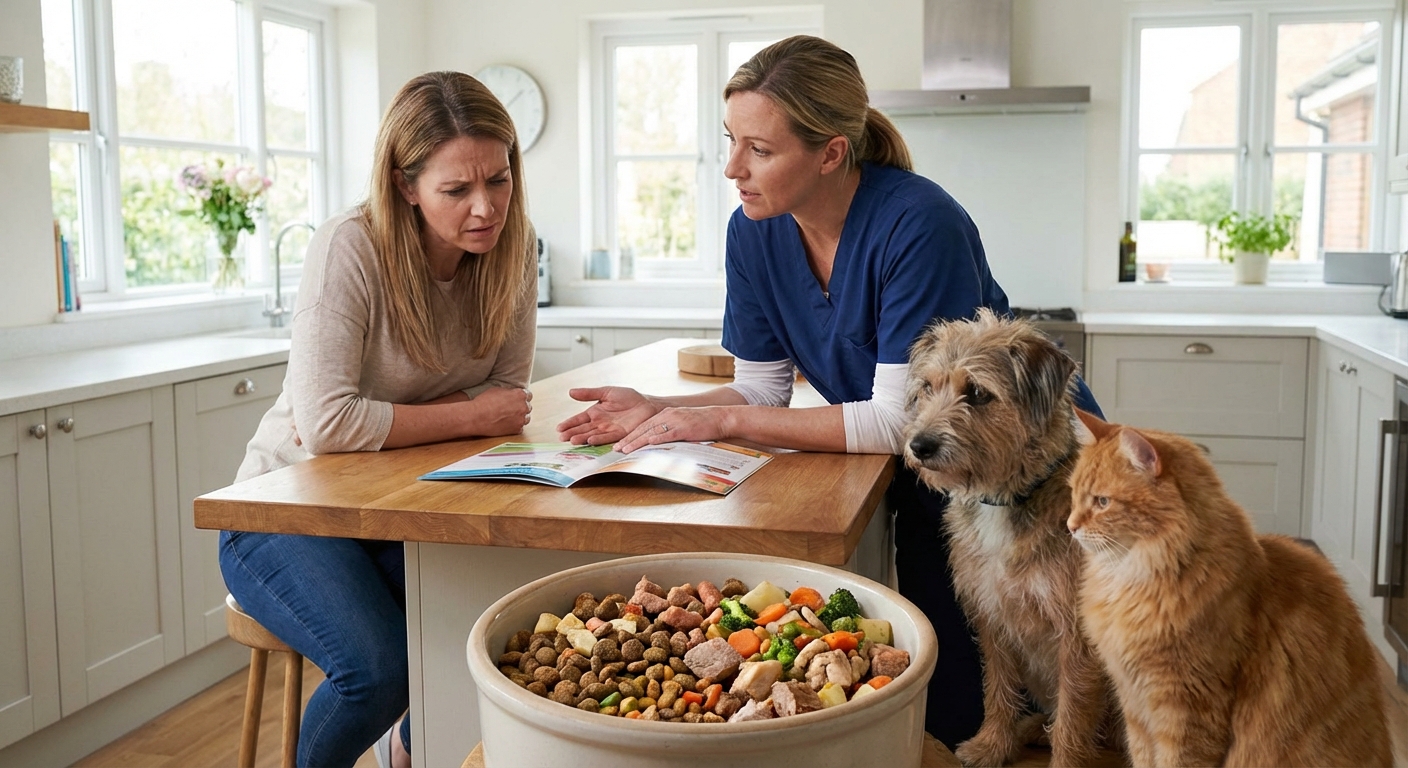
The way we feed our pets shapes their entire lives—energy levels, joint health, even how long they’re with us. Many nutrition mistakes come from love: extra treats, heaping bowls, trendy diets that sound wholesome.
Why Small Nutrition Choices Matter
Veterinarians see the long-term effects of these choices every day. The good news: small, consistent changes can dramatically improve your pet’s wellbeing.
Here are 10 common nutrition missteps, what they can lead to, and kinder, healthier alternatives.
1. Guessing Portions Instead of Measuring
The mistake: Filling the bowl “about halfway” or topping it off whenever it looks low.
Why it’s a problem:
- Leads to gradual weight gain
- Makes it hard to notice changes in appetite
- Ask your vet to calculate your pet’s daily calorie needs.
- Use a proper measuring cup or, ideally, a kitchen scale.
- Divide into 2–4 meals, depending on age and medical needs.
Vet-approved alternative:
Breed note: Small breeds (like Yorkies, Pomeranians) gain easily on tiny overfeeds; even a few extra kibbles per meal matter.
2. Treats Taking Over the Diet
The mistake: Biscuits, chews, jerky, and “just a little” of whatever you’re eating.
Risks:
- Obesity
- Pancreatitis (especially from fatty foods like bacon, sausage, skin-on poultry)
- Imbalanced nutrition if treats crowd out real food
- Keep treats to no more than 10% of daily calories.
- Choose low-calorie options: green beans, small carrot pieces, or part of their regular kibble used as training rewards.
Vet-approved alternative:
Cat tip: Many cats love freeze-dried single-ingredient treats (e.g., chicken or fish). Use very small pieces.
3. Abruptly Changing Foods
The mistake: Switching brands or proteins overnight.
Result: Diarrhea, vomiting, refusal to eat the new food.
Vet-approved alternative:
Transition slowly over 7–10 days:
- Days 1–3: 25% new / 75% old
- Days 4–6: 50% new / 50% old
- Days 7–9: 75% new / 25% old
- Day 10+: 100% new
Special care: Sensitive-stomach breeds (like German Shepherds) and older pets especially benefit from gradual changes.
4. Choosing Foods by Marketing Buzzwords
The mistake: Picking foods because they say “holistic,” “premium,” “natural,” or “grain-free.”
Reality: These words are mostly marketing, not guarantees of quality or safety.
Vet-approved alternative: Look for:
- An AAFCO/FEDIAF statement: “complete and balanced” for your pet’s life stage
- A named animal protein source (chicken, salmon, turkey) near the top of the list
- A company that does feeding trials and employs veterinary nutritionists
Discuss grain-free, raw, or boutique diets with your vet before switching, especially for large-breed and heart-disease-prone dogs.
5. Free-Feeding Cats and Small Dogs
The mistake: Filling the bowl once or twice a day and letting pets graze.
Issues:
- Many indoor cats and small dogs are bored, not hungry and overeat.
- Easy to miss subtle appetite changes—a key early sign of illness.
- Measure food and offer timed meals.
- Use puzzle feeders or treat balls, especially for indoor cats.
Vet-approved alternative:
Breed tip: Food-motivated breeds (Beagles, Labs, many mixed-breeds) almost always do better on portioned meals.
6. Ignoring Life Stage Needs
The mistake: Feeding puppies, kittens, or seniors the same adult formula.
Potential consequences:
- Poor growth or skeletal issues in puppies (especially large breeds)
- Inadequate nutrients for kittens during brain and eye development
- Excess or too few calories for seniors with slowing metabolisms
- Choose diets labeled for puppy/kitten, adult, or senior, or “all life stages” when appropriate.
- Large-breed puppies (Great Danes, Labs, Goldens) need special large-breed puppy formulas with controlled calcium.
Vet-approved alternative:
7. Over-Supplementing Without Guidance
The mistake: Adding multiple powders, oils, and vitamins “just in case.”
Risks:
- Nutrient excesses (too much calcium, vitamin D, or certain fats)
- Interactions with medications
- If you feed a complete and balanced commercial diet, most supplements are unnecessary.
- Add only what your vet recommends—common helpful additions may include:
- Joint supplements for large or senior dogs
- Omega-3s for some skin, joint, or heart conditions
- Specific veterinary-formulated supplements for medical needs
Vet-approved alternative:
8. Home-Cooked or Raw Diets Without a Nutrition Plan
The mistake: Following recipes found online or improvising raw meals without expert input.
Problems seen by vets:
- Calcium deficiency in growing animals
- Vitamin and mineral imbalances
- Bacterial contamination with raw diets (risk for pets and people)
- If you prefer home-prepared food, ask for a referral to a board-certified veterinary nutritionist.
- Use recipes that include a precisely formulated supplement to fill in nutritional gaps.
Vet-approved alternative:
Never feed cooked bones; they can splinter and cause life-threatening injuries.
9. Forgetting About Hydration
The mistake: Assuming pets will drink enough water on their own.
Concerns:
- Cats especially have a low thirst drive and are prone to urinary and kidney issues.
- Some dogs with underlying health conditions (like kidney disease or diabetes) have special hydration needs.
- Provide multiple water bowls; clean them daily.
- For cats, consider fountains and adding wet food.
- Use low-sodium broth (no onions/garlic) as a topper if your vet approves.
Vet-approved alternative:
Breed note: Long-haired and flat-faced cats (Persians, Himalayans) sometimes dislike water on their whiskers—wide, shallow bowls can help.
10. Not Adjusting Food as Pets Age or Lifestyle Changes
The mistake: Feeding the same amount for years despite changes in weight, activity, or health.
What happens:
- A formerly active dog becomes a couch companion but keeps getting the same calories—weight creeps up.
- A cat with early kidney disease may need a therapeutic diet, not a standard adult food.
- Reassess diet at least once a year with your veterinarian (more often for seniors).
- Adjust portions or formulas with any major change:
- Spay/neuter surgery
- New exercise routine
- Diagnosis of chronic illness
Vet-approved alternative:
Gentle Breed-Specific Watchpoints
- Labradors & Beagles: Naturally food-driven; obesity is common. Strict portion control and regular weigh-ins are essential.
- Toy breeds (Chihuahuas, Yorkies): Tiny stomachs; need calorie-dense food but very carefully measured portions.
- Sighthounds (Greyhounds, Whippets): Naturally lean; don’t confuse “slim” with “underfed.” Ask your vet about healthy body condition.
- Maine Coon and Ragdoll Cats: Larger frames can mask weight gain—check body condition by feel, not just by eye.
Partnering With Your Vet on Nutrition
Nutrition isn’t one big decision; it’s dozens of little ones over many years. Checking in regularly with your veterinarian about food choices, body condition, and treats creates a gentle, realistic plan that works for both you and your animal.
If you’re unsure about your pet’s diet, you’re not failing—you’re caring. Bring your questions, your food labels, and even your treat list to your next appointment. Together, you can fine-tune a nutrition routine that helps your companion feel their best at every stage of life.