
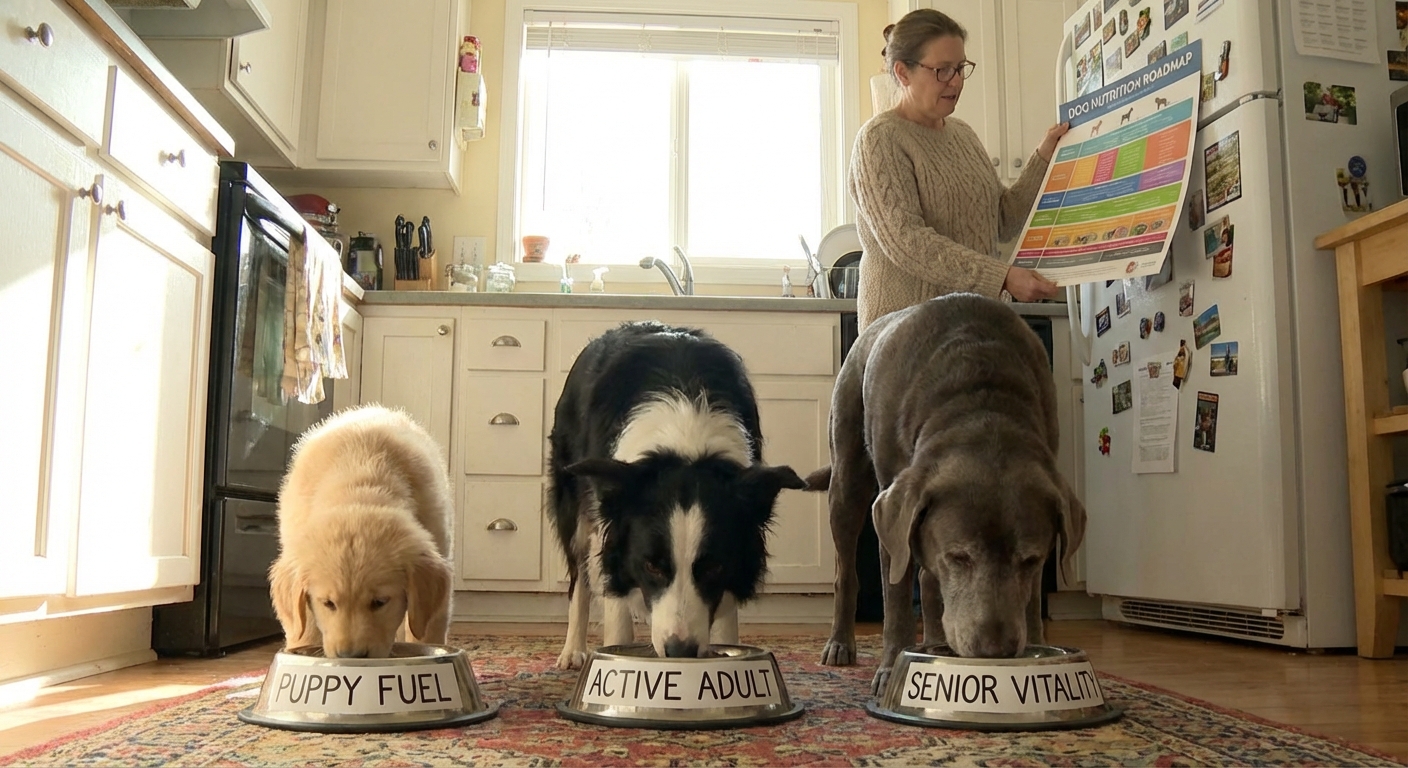
Your dog changes more in the first two years of life than most people realize—bones harden, joints develop, metabolism shifts, and the immune system matures. Then, quietly, aging begins. Feeding the same food and portions from puppyhood to old age is a bit like giving a toddler and a grandparent the exact same diet.
Why Your Dog’s Diet Should Grow Up With Them
This guide walks through dog nutrition by life stage, blending veterinary insight with practical, loving care.
Stage 1: Puppy Nutrition (Birth to 12–24 Months)
Early Weeks: Mother’s Milk or Milk Replacers
For the first few weeks, puppies rely on:
- Mother’s milk, perfectly balanced for growth
- Or, if orphaned, a commercial canine milk replacer (never cow’s milk)
If you’re hand-raising a puppy, work closely with a veterinarian; correct feeding schedules and amounts are truly life-saving at this stage.
Weaning to Juvenile (3–8 Weeks+)
Around 3–4 weeks, puppies begin transitioning to solid food:
- Use a puppy-specific formula, softened with warm water.
- Offer small, frequent meals.
Choosing the Right Puppy Food
Puppies need:
- Higher protein and fat for growth
- Carefully balanced calcium and phosphorus for bones
- Choose a food labeled for large-breed puppies.
- Overfeeding or too much calcium can increase risk of hip dysplasia and other joint problems.
- 3–4 meals per day for young puppies
- Gradually shift to 2 meals a day by 6–12 months
For large and giant breeds (Labradors, Golden Retrievers, Great Danes, German Shepherds):
Feeding Tips:
Red flags: Rapid, chubby growth is not cute—it can strain growing joints.
Stage 2: Young Adult Dogs (1–3 Years)
By about 12 months (up to 18–24 months for giant breeds), your dog is transitioning from growth to maintenance.
Switching From Puppy to Adult Food
Work with your vet to choose the right timing. In general:
- Small breeds: around 10–12 months
- Medium breeds: around 12–15 months
- Large/giant breeds: up to 18–24 months
Transition gradually over 7–10 days to reduce stomach upset.
Nutritional Focus for Young Adults
The goal here is stable, lean body condition:
- Adequate protein to maintain muscle
- Moderate fat and calories to prevent weight gain
- You may need performance or active formulas, especially if they’re working or competing.
- Standard adult or even lower-calorie formulas may be appropriate.
- You should be able to feel ribs easily with a thin fat covering.
- When viewed from above, your dog should have a visible waist.
For active breeds (Border Collies, Australian Shepherds, Huskies):
For more sedentary or apartment dogs:
Body condition check:
Stage 3: Midlife Maintenance (3–7 Years, Breed-Dependent)
These are often the “invisible years” nutritionally, when many dogs quietly gain weight as life settles into a routine.
Adjusting Calories for Real Life
Ask yourself:
- Has my dog’s activity level changed?
- Have we moved from a yard to an apartment—or vice versa?
- Are we walking less than we did a year ago?
- Reduce portion sizes slightly
- Switch to a weight management or lower-calorie formula if weight gain continues
If yes, it might be time to:
Breed-Specific Considerations
- Labradors, Beagles, Cocker Spaniels: Extremely prone to weight gain—strict measuring is essential.
- Boxers, Dobermans: Watch heart health; ask your vet about diets appropriate for breeds predisposed to cardiac issues.
- Bulldogs, Pugs, Frenchies: Extra weight exacerbates breathing issues; keeping them lean is an act of kindness.
Dental Health and Diet
By midlife, dental disease is extremely common. While food alone won’t prevent it:
- Some veterinary dental diets can reduce tartar.
- Avoid very hard chews or bones that may crack teeth; ask your vet for VOHC-approved options.
Stage 4: Senior Dogs (Typically 7+ Years, Sooner for Giant Breeds)
"Senior" is not a disease—but it does signal a shift in priorities.
When Does a Dog Become Senior?
Rough guidelines:
- Small breeds (<20 lbs): 8–10 years
- Medium breeds (20–50 lbs): 7–9 years
- Large breeds (50–90 lbs): 6–8 years
- Giant breeds (>90 lbs): as early as 5–6 years
Senior Nutrition Goals
- Maintain a healthy weight and muscle mass
- Support joint health
- Protect kidney, heart, and cognitive function where possible
- Slightly lower-calorie foods (if less active)
- Higher-quality, easily digestible protein
- Added omega-3 fatty acids for joints and inflammation
- Kidney disease
- Heart disease
- Diabetes
- GI issues
Many senior dogs benefit from:
However, not all seniors need “senior” food. Some require therapeutic diets tailored to:
This is where bloodwork and regular checkups become essential.
Special Situations at Any Age
Overweight and Obese Dogs
Obesity increases risk for:
- Arthritis and joint pain
- Diabetes
- Certain cancers
- Reduced lifespan
- A prescription weight-loss diet (more effective than just “less food” of a regular diet)
- A safe weight-loss plan of about 1–2% of body weight per week
Your vet may recommend:
Highly Active or Working Dogs
Sled dogs, working herders, search-and-rescue dogs, and some sporting dogs have very high calorie demands.
They may need:
- Energy-dense performance diets
- Multiple meals per day during intense work
- Careful hydration planning
Always adjust gradually and in consultation with a vet, especially during peak activity seasons.
Dogs With Food Sensitivities or Allergies
Signs may include:
- Chronic itching, ear infections, or paw licking
- Soft stools or chronic GI upset
- An elimination diet using a novel protein or hydrolyzed diet
- Strict avoidance of all other foods and treats during the trial
Your veterinarian may suggest:
Self-diagnosing and cycling through many store-bought “limited ingredient” foods can delay proper diagnosis.
Practical Feeding Tips Across All Life Stages
Schedule Annual (or Semi-Annual) Nutrition Checkups
Ask your vet to assess body condition, muscle condition, and diet at every visit.
Use Food as Enrichment
Puzzle feeders, snuffle mats, and training with part of meals support mental health at any age.
Adjust for Spay/Neuter
Calorie needs often drop by 15–30% after surgery; portions should adjust accordingly.
Monitor Poop and Coat
Shiny coat, normal stools, and good energy are often signs your dog’s diet agrees with them.
Transition Slowly Between Life Stages
Don’t jump from puppy to senior food; move from puppy → adult → senior (or therapeutic) as your vet advises.
When to Seek Veterinary Nutrition Help
Make a nutrition appointment if you notice:
- Sudden weight gain or loss
- Changes in appetite, thirst, or stool
- Stiffness, reluctance to exercise, or breathing difficulties
- New diagnoses like kidney disease, pancreatitis, or diabetes
A board-certified veterinary nutritionist can help with complex cases—working alongside your regular vet to design a tailored diet.
Feeding Love, One Stage at a Time
Your dog will never ask for a specific brand of food—but they will show you with their body, energy, and comfort how well their diet is serving them. By adjusting nutrition thoughtfully from puppyhood to the golden years, you’re offering your companion the gift of easier movement, brighter days, and a higher chance of staying by your side for longer.
Each new stage is an opportunity to pause, reassess, and lovingly fine-tune what’s in their bowl.