
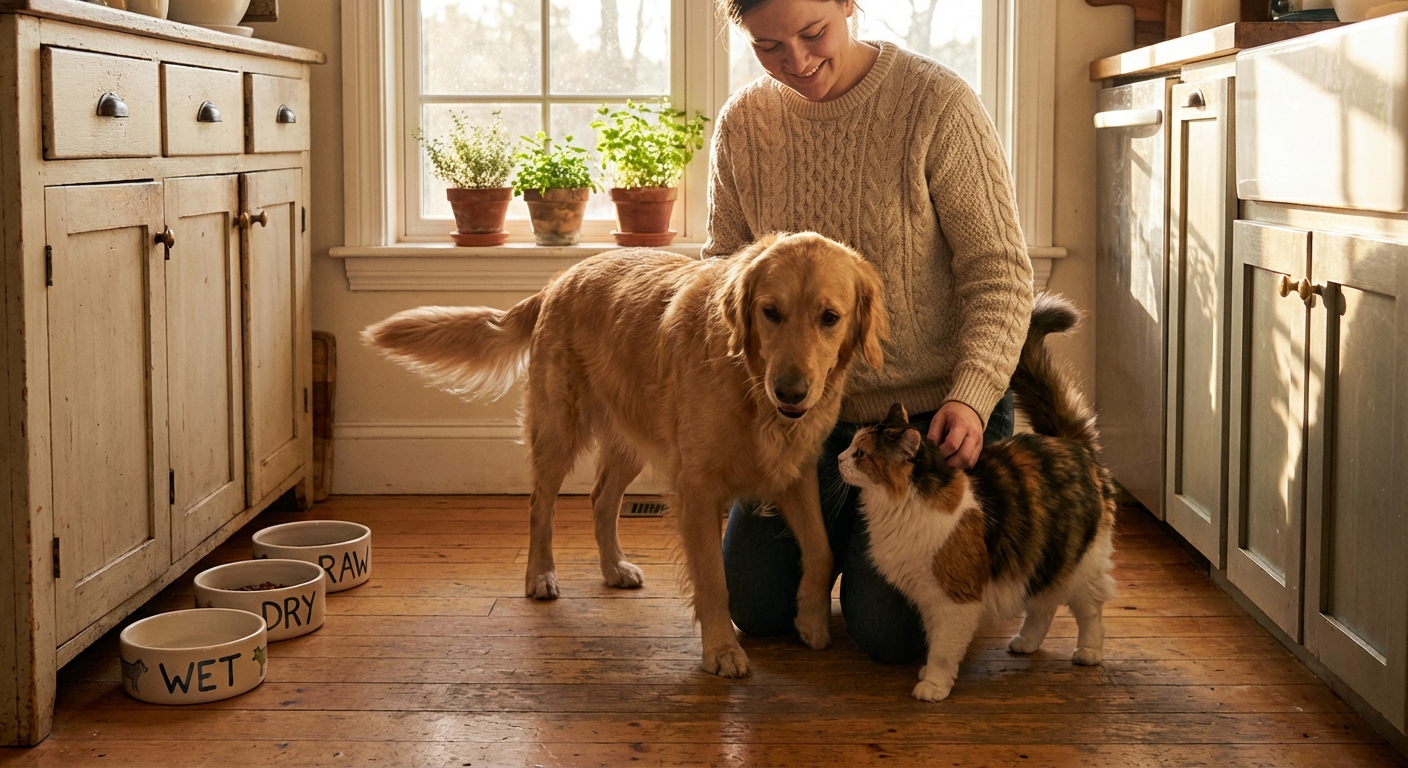
Walk down any pet food aisle or scroll online and you’ll find a dizzying mix of dry, wet, raw, gently cooked, freeze-dried, and more. Each camp has passionate advocates, and it can feel overwhelming—especially when you just want to do what’s best for an animal you love.
Why Diet Type Matters (and Why There’s No One “Perfect” Choice)
Veterinary nutritionists generally agree on this: the best diet is one that is complete, balanced, safe, and suits your pet’s individual needs and your household’s realities.
This guide compares three of the most common diet categories—dry, wet, and raw—with warmth, nuance, and a focus on both science and everyday life.
Dry Food (Kibble)
What It Is
Kibble is made by mixing ingredients into a dough, cooking (extruding) it under high heat and pressure, then drying and coating it with fats and flavors.
Potential Benefits
- Convenience: Easy to store, measure, and feed.
- Cost-effective: Generally the most affordable option per calorie.
- Dental support: Some kibbles, especially veterinary dental diets, can help reduce tartar build-up.
- Formulation variety: Many therapeutic diets (kidney, joint, allergy) are available as kibble.
Limitations
- Lower moisture: Most kibble is around 8–12% moisture, which may not be ideal for some cats or pets with certain urinary and kidney issues.
- Palatability: Some picky eaters prefer more aromatic wet or fresh foods.
Best Fits
- Healthy adult dogs with no special medical needs.
- Cats who drink well and don’t have urinary or kidney concerns.
- Multi-pet households needing an economical, easy-to-portion option.
Breed-specific note:
Small breeds often benefit from small-bite formulas. Large breeds may need larger kibble to encourage chewing and avoid gulping.
Wet Food (Canned, Pouched, or Trays)
What It Is
Wet food is cooked in a sealed can or pouch, keeping it moist and flavorful. It typically has higher protein and fat content relative to calories than many dry foods.
Potential Benefits
- High moisture: Often 70–80% water—particularly helpful for cats and dogs who don’t drink enough.
- Highly palatable: Strong aromas and softer textures appeal to many pets, especially seniors or those with dental pain.
- Portion flexibility: Smaller, individually packaged servings can help with precise feeding.
Limitations
- Cost: Usually more expensive per calorie.
- Storage: Opened cans must be refrigerated and used within a few days.
- Dental impact: Doesn’t provide the light abrasive action some dry foods do—though this shouldn’t replace proper dental care anyway.
Best Fits
- Cats, especially indoor and male cats, where added moisture can help support urinary tract health.
- Senior pets with dental issues or reduced appetite.
- Dogs recovering from illness or surgery who need tempting, easy-to-eat food.
Breed-specific note:
Flat-faced cats and dogs (Persians, Pugs, French Bulldogs) may find certain wet textures easier to manage than large kibble.
Raw Diets (Commercial or Home-Prepared)
What They Are
Raw diets typically include uncooked meat, organs, sometimes bones, and, depending on the formula, vegetables or fruits. They can be:
- Commercially prepared (frozen or freeze-dried)
- Home-made (using raw ingredients)
Potentially Perceived Benefits
Many advocates report:
- Shinier coats
- Smaller stools
- High palatability
However, these observations are often anecdotal and can also occur simply when moving from a lower-quality diet to a higher-quality one—raw or cooked.
Major Concerns (Backed by Veterinary Organizations)
- Bacterial contamination: Raw diets can carry Salmonella, E. coli, Listeria, and other pathogens that may affect both pets and humans (especially children, elderly, or immunocompromised family members).
- Nutritional imbalance: Home-prepared raw diets frequently lack balanced vitamins and minerals without a carefully designed supplement plan.
- Bone risks: Whole bones can fracture teeth, cause choking, or create life-threatening obstructions or perforations.
Most major veterinary associations, including the American Veterinary Medical Association, express caution about raw feeding—especially homemade versions.
If You Choose Raw
If, after understanding the risks, you still wish to feed raw:
- Use commercial diets that meet AAFCO/FEDIAF standards and are formulated by veterinary nutritionists.
- Practice strict kitchen hygiene to protect your family.
- Avoid raw diets entirely if anyone in the home is immunocompromised.
- Never feed cooked bones, and be cautious even with raw bones.
Always consult your veterinarian or a board-certified veterinary nutritionist before starting.
How to Decide What’s Right for Your Pet
Rather than debating which diet type is “best” in general, focus on which is best for your individual animal and your home.
Step 1: Consider Your Pet’s Health
Ask your veterinarian:
- Does my pet have kidney, liver, urinary, heart, GI, or skin issues?
- Would they benefit from higher moisture?
- Do they need a therapeutic diet only available in certain formats?
- A male indoor cat with a history of urinary crystals may do best on a moisture-rich wet or mixed diet.
- A dog with chronic pancreatitis might need a low-fat, easily digestible diet, often in kibble or specific canned form.
For example:
Step 2: Consider Age and Dental Status
- Puppies and kittens: Often do well on either wet or dry, but need growth-specific formulas.
- Senior pets or those missing teeth: May find soft wet food or soaked kibble more comfortable.
Step 3: Consider Your Lifestyle and Budget
Be kind to yourself here—consistency matters.
- If you travel often or have a busy schedule, a high-quality kibble may be more realistic.
- If you’re able and willing to handle open cans, refrigeration, and higher cost, adding wet food can be beneficial.
Remember, a well-chosen kibble is far superior to an unbalanced or unsafe diet you can’t maintain.
Mixed Feeding: The Best of Both Worlds for Many Pets
You don’t have to choose only one. Many vets support mixed feeding, such as:
- Morning: Dry food
- Evening: Wet food
- Or: Kibble as the base, with a spoonful of wet as a topper
- Improved palatability
- Increased moisture intake
- Some dental benefit from kibble chewing (though this is modest)
Potential benefits:
Work with your vet to ensure total daily calories stay appropriate.
Special Breed & Species Considerations
For Cats (Obligate Carnivores)
- Higher moisture diets (wet or mixed) are often recommended.
- Many indoor cats are prone to obesity; measure wet foods carefully too.
- Long-haired breeds (Maine Coons, Persians) may benefit from formulas designed for hairball control, available in both dry and wet options.
For Small-Breed Dogs (Toy Poodles, Chihuahuas, Yorkies)
- Their small stomachs can benefit from calorie-dense kibble or nutrient-rich wet food in small, frequent meals.
- Mixed feeding can help maintain appetite in picky eaters.
For Large & Giant Breeds (Great Danes, Mastiffs, Newfoundlands)
- Controlled-calorie, joint-supportive diets are key.
- Some owners prefer kibble for cost and convenience, sometimes with wet toppers.
Red Flags No Matter What You Feed
Contact your veterinarian if, on any diet type, you see:
- Chronic soft stools, vomiting, or gas
- Extremely dry, flaky skin or dull coat
- Sudden changes in thirst or urination
- Weight loss or gain despite similar portions
These signs may signal that the diet isn’t appropriate—or that an underlying health issue needs attention.
A Kind, Realistic Approach to Pet Diet Choices
It’s easy to feel guilty when reading strong opinions about pet food. But your care and willingness to learn already put your pet in a very lucky minority.
Instead of chasing the latest trend or feeling pressured into a particular philosophy, aim for this:
- Complete and balanced food, verified on the label.
- Safe handling and hygiene, especially with raw or wet foods.
- A good fit for your pet’s age, health, and preferences.
- A good fit for you, so you can sustain the routine with love, not stress.
When in doubt, invite your veterinarian into the conversation. Bring packaging, feeding amounts, and your questions. Together, you can choose a diet type that nurtures your animal’s body and honors the bond you share.